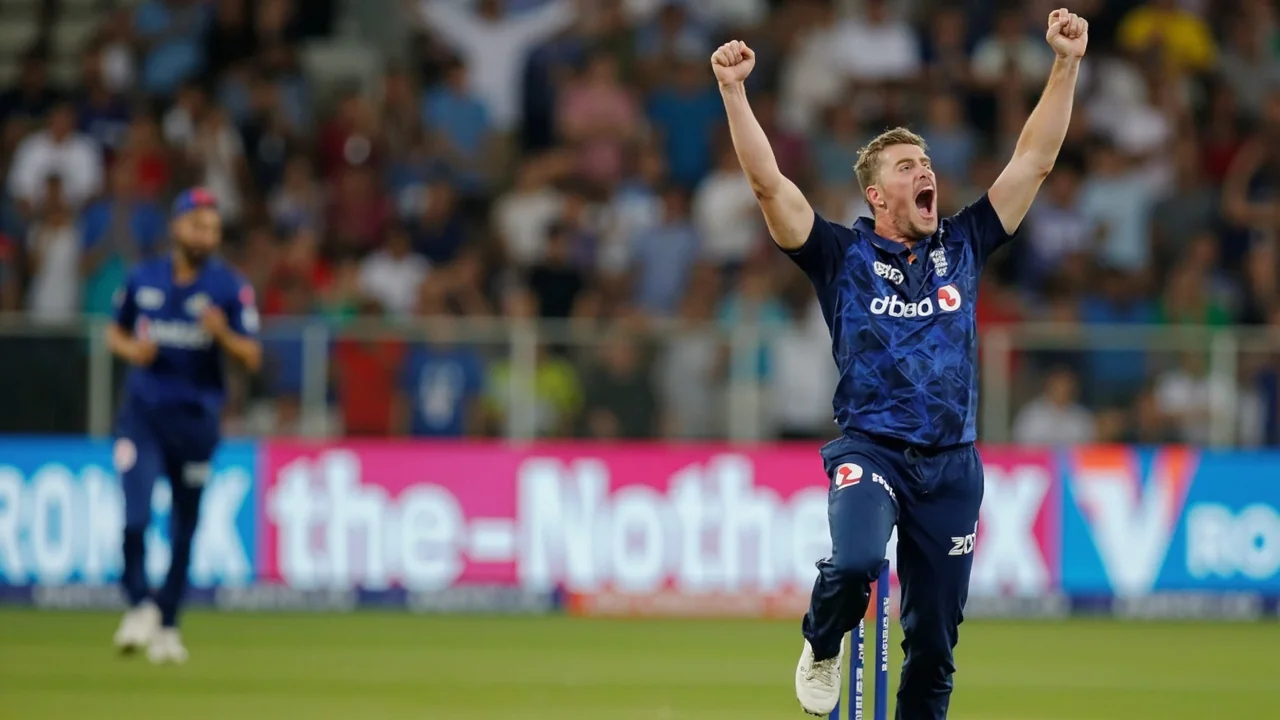
Where SOU And BPH Stand Before The Rose Bowl
Match 13 of The Hundred Men’s 2026 is the Thursday-evening fixture at the Rose Bowl, Southampton, first ball scheduled for 11:00 PM IST — 5:30 PM GMT and 6:30 PM local. The broadcast goes out on Sky Sports Cricket in the UK and the stream runs through the BBC iPlayer and the official Hundred app; Indian viewers will follow the action on Sony Sports Network and the SonyLIV stream, with the live blog on the Halaplay scorecard picking up ball-by-ball state from the second innings.
Southern Brave arrive at the Rose Bowl in their worst run of the competition so far. Three matches, three defeats, and the table reads as a side whose batting card has not fired in unison even once. The bowling unit, by contrast, has held its discipline in two of those losses — a wicket-keeping pattern that keeps a side in the contest but cannot, on its own, win matches. Chris Jordan, who took the captaincy ahead of the season, has been the most consistent Brave performer with the ball; the top-order aggression the side has historically built around has been sporadic rather than structural.
Birmingham Phoenix, meanwhile, come in off a one-from-two start. Their first match of the cycle produced a win, their second ended in a defeat by 87 runs — a margin large enough to indicate that one department (either the batting or the bowling) collapsed on that day, not both at once. The Phoenix’s identity through the cycle has been the Donovan Ferreira-Rehan Ahmed partnership at the back end of the innings; both players have shown the kind of clean hitting against spin that turns a 140-par total into a 170-plus finish on a good batting night.
Head-To-Head Between Southern Brave And Birmingham Phoenix
Across the seven completed meetings between these two sides in The Hundred’s history, the ledger reads SOU 5, BPH 1, with one no-result tie. The 5-1 split is the cleanest single-side dominance in any fixture on the Phoenix’s schedule and the strongest argument for any fantasy manager building a Brave stack: even in seasons where Brave have not made the knockouts, they have found a way past Phoenix more often than not. The single tie came in the 2023 cycle and was washed out partway through the second innings; in the seven completed matches, Brave have crossed 150 in five of them.
For fantasy managers, the head-to-head read is most useful for identifying the death-overs matchup that decides captain picks. Against Phoenix, Brave’s bowlers — Jordan, Archer, and the spin options through Rashid and Saif Zaib — have traditionally been able to keep the Phoenix middle order to a run-a-ball rather than the 1.5-a-ball they manage against most other sides. That is the single most useful number to log before locking a captain pick.
Probable XI: Southern Brave
The Khel Now match preview, published before the toss, lists the Brave probable XI as Jamie Smith behind the stumps, with Ben McKinney, Marcus Stoinis, David Miller, Nikhil Chaudhary, Tristan Stubbs, Chris Jordan as captain, Jofra Archer, Saif Zaib, Adil Rashid, and Luke Wood completing the eleven. That is a card with a top-order spread of left-and-right combinations (McKinney left-handed, Stoinis right-handed, Miller left-handed), a Stoinis-Stubbs middle-order power package, and a bowling unit led by Archer and Jordan with Rashid as the spin matchup option.
For fantasy players, the most important data points are Stoinis at three (a power hitter on a short-format wicket who can bat through), Miller at four (the left-handed anchor who controls the middle phase), and Archer at nine or ten (his wicket-taking ceiling in the powerplay is the highest single-player differential on the card). Jordan at eight with the captain’s armband is also worth flagging — captaincy adds a small scoring bonus on most fantasy platforms, and Jordan’s wicket-taking card against the Phoenix top order is the most reliable single line in the Brave bowling plans.
Probable XI: Birmingham Phoenix
The Phoenix probable XI from the same pre-match note includes Joe Clarke behind the stumps, with Will Smeed, Rehan Ahmed, Laurie Evans, Donovan Ferreira as captain, Mitchell Owen, Sean Dickson, Ben Dwarshuis, Scott Currie, Saqib Mahmood, and Usman Tariq completing the eleven. Smeed at the top is the power-hitter; Clarke at three is the wicketkeeper-batter who anchors the powerplay; Ferreira at five is the death-overs finisher who can clear the ropes when the slower bowlers miss their lines.
The Phoenix bowling card splits cleanly into a pace unit (Dwarshuis, Currie, Mahmood) and a spin unit (Ahmed, Tariq). Rehan Ahmed’s leg-spin at four gives the side an attacking spin option through the middle overs, and Mahmood’s death-overs pace is the most reliable wicket-taking delivery in the Phoenix plans. For fantasy managers, the practical read is that Phoenix’s batting ceiling is built around Smeed-Ferreira and their bowling ceiling is built around Mahmood-Dwarshuis; in a 100-ball contest, that gives two clean stacks to choose from.
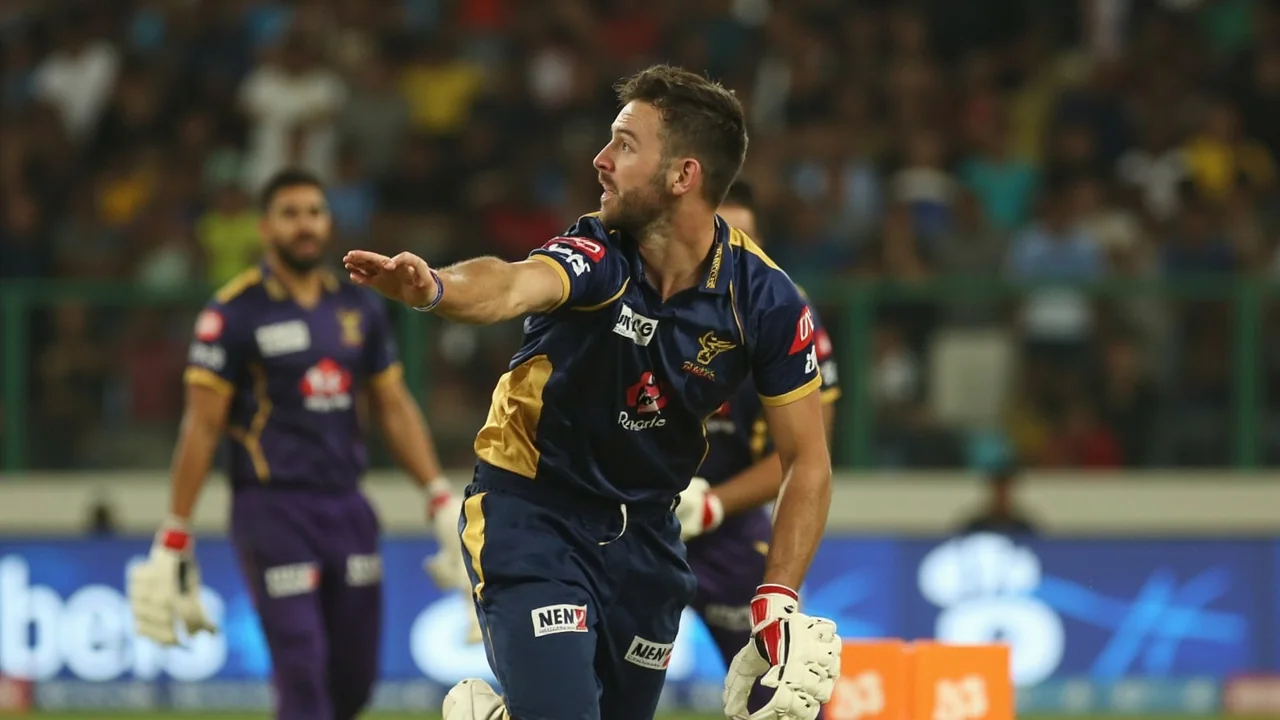
Rose Bowl Pitch Report And Conditions
The Rose Bowl pitch report from the pre-match note characterises the surface as a batting-friendly wicket with consistent bounce and pace, average score in the 155-165 band across recent Hundred matches here, with possible early swing under overhead conditions. The forecast at the Rose Bowl for Thursday evening is partly cloudy, around 23°C and 53% average humidity — a profile that typically helps the seamers in the first 15 balls and the batters from ball 20 onwards as the ball softens.
For fantasy managers, the Rose Bowl read translates into three concrete build notes:
- Captain a power-hitter who can clear the ropes once the ball comes on. Stoinis at three for Brave and Ferreira at five for Phoenix are the two highest-ceiling batters on their respective cards; both are clean picks for the multiplier armband.
- The new ball is the wicket-taking ball. Under partly cloudy skies at 23°C with 53% humidity, expect early lateral movement for Archer, Mahmood, and Jordan. A frontline seamer in the captain pick pool will pay off if they take one in the powerplay.
- Death-overs bowling is the high-leverage role. Rashid and Ahmed through the middle, Mahmood and Dwarshuis at the death — pick two of those four into your Halaplay XI and you have the wicket-taking card covered across both phases.
Suggested Dream11 Team 1 — Stoinis Captain, Miller Vice
The first Dream11 team from the pre-match note sets Marcus Stoinis as captain (2x) and David Miller as vice-captain (1.5x). Wicketkeepers in the XI are Jamie Smith (SOU), Tristan Stubbs (SOU, also bats), and Joe Clarke (BPH). The batting core lines up Stoinis at three, Miller at four, Smeed at the top of the Phoenix card, and Nikhil Chaudhary as the Brave all-rounder. The all-rounder slot goes to Chris Jordan with the captaincy armband he wears in real cricket translating into the vice-captain-style scoring boost at number eight.
The bowling unit is Archer (SOU pace), Mahmood (BPH pace), Rashid (SOU spin), Dwarshuis (BPH pace), with Saif Zaib (SOU spin) as the fifth bowler option. This is the Brave-leaning build: four Brave bowlers or all-rounders, three Phoenix batters in the top half, and the captaincy multiplier on Stoinis who bats at three on a batting-friendly pitch.
The case for this team is straightforward. Stoinis has scored the bulk of Brave’s runs in the three completed matches; on a 155-165 pitch at the Rose Bowl, his ceiling is the highest single-player ceiling in the match. Miller as vice-captain is the safety net — even if Stoinis fails, Miller’s anchor role at four gives the side a 1.5x multiplier on a consistent 30-40 rather than a zero.
Suggested Dream11 Team 2 — Smith Captain, Currie Vice
The second Dream11 team inverts the captaincy onto the wicketkeeper-batter. Jamie Smith (SOU) takes the 2x armband; Scott Currie (BPH) takes the 1.5x. Wicketkeepers are Jamie Smith, Joe Clarke, with the third slot used for an additional Brave batter. The batting core shifts to Smeed, Clarke, Smith, Stoinis, and Miller, with Chris Jordan added as a bowler who can bat at eight.
The bowling card in Team 2 is Archer, Mahmood, Rashid, Currie, and Dwarshuis. Currie’s 1.5x is the differentiated pick — the Phoenix seamer has been the most economical of the Phoenix bowlers in the two completed matches, and the vice-captain multiplier on a wicket-taking 2-for-25 type return is the cleanest single differential between this team and the field.
The case for Team 2 is the wicketkeeper-led build. Smith’s recent keeping and batting form for Brave is the kind of dual-role ceiling that warrants the 2x in a 100-ball contest where the top-order batter is also the gloves. Currie’s death-overs role gives the team a leg-side wicket-taking option that Team 1 does not carry.
Which Team Fits The Conditions Better
The Rose Bowl at 6:30 PM local time on a partly cloudy evening is, on balance, a batting-friendly surface with a seam-friendly first 15 balls. Team 1’s ceiling — Stoinis 2x at three, Miller 1.5x at four — leans into the batting-friendliness and accepts the risk of early wickets; Team 2’s ceiling — Smith 2x as keeper-batter, Currie 1.5x as a death bowler — leans into the dual-role and the death-overs matchup.
For a single Halaplay entry, Team 1 is the higher-ceiling play and the right call for a small-entry contest where the prize pool is shallow and you want the upside. For a mega contest entry, Team 2 is the right call because the differential pick on Currie lowers the ownership overlap with the field — most fantasy managers will captain Stoinis, and the field-side read of the captaincy conversation favours Smith as the contrarian 2x. Build accordingly.
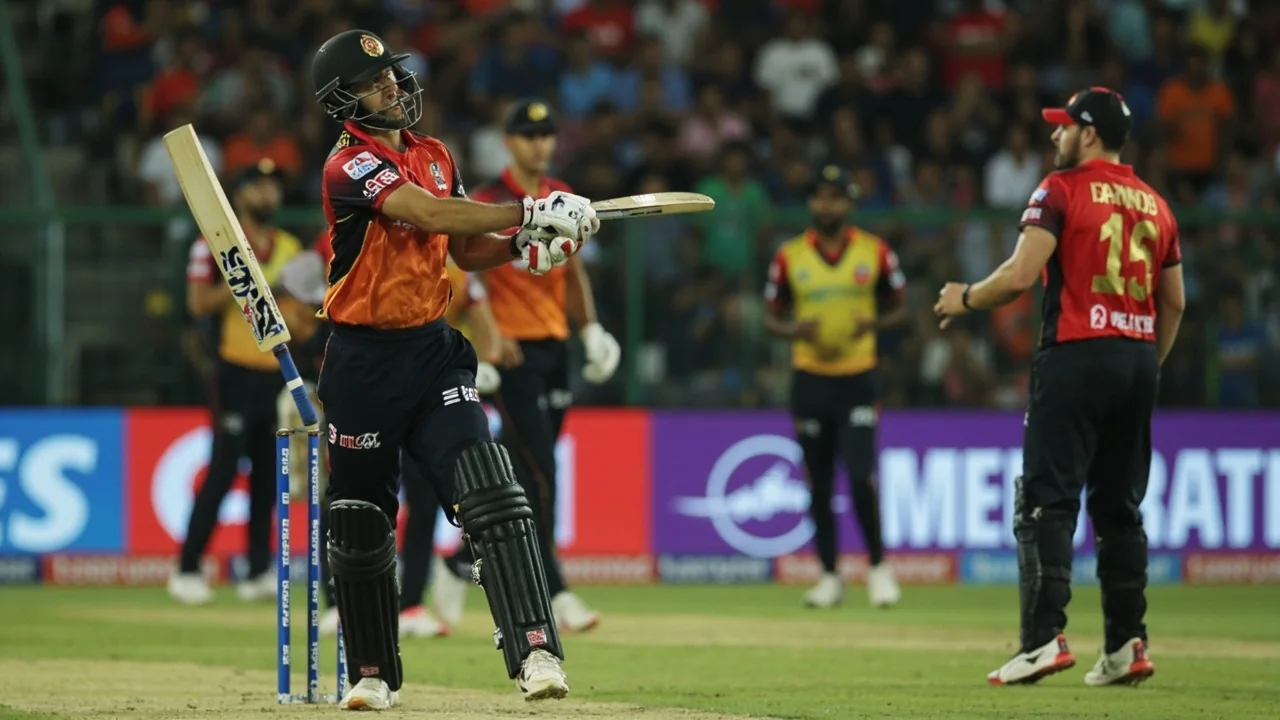
Match Prediction: Why Phoenix Are The Pick
The pre-match article prediction backs Birmingham Phoenix to win, citing Southern Brave’s poor recent form. Three straight defeats is the cleanest single signal on the Brave card; Phoenix’s 1-1 record with a single heavy defeat masks a more competitive side than the table line suggests, and the 87-run loss came on a surface that did not suit their batting depth. At the Rose Bowl on a batting-friendly pitch with a 155-165 average, Phoenix’s death-overs hitting (Ferreira, Smeed) is the more reliable single department than Brave’s top-order (Stoinis, Miller), which has been sporadic through the first three matches.
The cleanest single read for fantasy managers: pick Phoenix batters in the powerplay (Smeed, Clarke), pick Phoenix bowlers at the death (Mahmood, Currie), and pick Brave batters in the middle overs (Stoinis, Miller). That is the three-department split that the form table and the conditions both support.
How To Read The Brave Form Line
Southern Brave’s three-match run has produced three defeats, but the scorecard pattern is more useful than the result line. In each of the three matches, Brave have taken wickets in the first innings (the bowling unit has held its discipline), but the batting unit has failed to chase down totals in the 140-160 band. The pattern is a side that is bowling first and losing the chase, not a side that is being bowled out cheaply. That distinction matters for fantasy: the Brave bowlers (Archer, Jordan, Rashid) are still the right picks for a captain’s wicket-taking differential; the Brave batters are the riskier side of the build.
For Stoinis specifically, three matches is a small sample but enough to identify the trend — he has been Brave’s highest scorer in two of the three. At number three, with Archer and Jordan to bat around him at nine and eight, he is the Brave batter with the most upside and the most clearly defined role. The captain pick on Stoinis is the right call for Team 1.
How To Read The Phoenix Form Line
Phoenix’s 1-1 record hides a more competitive side than the table position suggests. The win was a competent all-round performance; the 87-run loss was a single-department collapse rather than a structural failure. Phoenix’s batting unit has the depth to chase 160-plus if Ferreira-Rehan finish well, and the bowling unit has the variety to take wickets across powerplay, middle, and death phases (Mahmood at the death, Ahmed in the middle, Dwarshuis with the new ball).
The single matchup that matters most for Phoenix is the Stoinis-Rehan matchup in the middle overs. Rehan’s leg-spin against Stoinis’s right-handed power game is the kind of bowler-batter duel that decides a 100-ball contest in the second half of the innings. If Rehan can hold Stoinis through balls 30-60, Phoenix’s middle-overs scoring rate drops and the Brave total stays under 150. If Stoinis takes the attack to Rehan, Brave’s total pushes past 160 and the Phoenix chase becomes a different game.
Injury And Availability Notes
At the time of the pre-match note, no injury update had been added for either side. The probable XIs are the working assumption for both squads. The single live update to watch is the toss — the side batting first at the Rose Bowl in the recent Hundred matches has generally posted the higher score in the first innings, and the captain’s call at the toss will set the conditions for the captain pick at the fantasy lock-in deadline.
If Brave win the toss and bat first, the Stoinis captain pick becomes stronger — batting first gives him the full 100 balls to bat through on a batting-friendly pitch. If Phoenix win the toss and bat first, the Phoenix batters become the priority stack, and a Team 2 build with Smith as captain is the right contrarian call.
Fantasy Strategy: The Three-Stack Approach
The cleanest fantasy build for Match 13 is a three-stack approach: a Brave batting stack (Stoinis, Miller), a Brave bowling stack (Archer, Rashid), and a Phoenix batting stack (Smeed, Clarke). Captain Stoinis from the Brave batting stack; vice-captain Miller from the same Brave batting stack for the consistency play. The three-stack gives you coverage across both innings without doubling up on a single department.
For Halaplay mega contests, the differential pick is Chris Jordan. Jordan’s wicket-taking card against Phoenix’s top order is the most reliable single department in the Brave plans, and his ownership in the field is typically lower than Stoinis or Archer. Lower ownership, similar ceiling, defined role at the death.
What To Watch In The First 30 Balls
The Hundred’s first 30 balls — the powerplay equivalent — will decide the fantasy result more than any other phase. Two matchups to log:
- Stoinis vs the Phoenix new ball. If Stoinis takes the powerplay to Mahmood and Dwarshuis, the Brave batting ceiling lifts and the captain pick debate closes early. If he falls cheaply, the captain armband on Stoinis is wasted points and Team 2 becomes the right build.
- Smeed vs Archer. This is the marquee individual battle. If Archer gets Smeed early, the Phoenix powerplay collapses and the Brave total pushes past 160. If Smeed takes the attack to Archer, the Phoenix total lifts and the captain pick should pivot to a Phoenix batter for the second innings.
The first 30 balls will set up the second 70. Fantasy managers who lock their teams at the toss and watch these two matchups will have the cleanest read on whether to hold the captain pick or pivot before the lock-in deadline.
Beyond Match 13: Reading The Hundred Men’s 2026 Calendar
Match 13 is roughly the midpoint of The Hundred Men’s group stage. By the end of this fixture, every side will have played at least three or four matches, and the form cycle for the season will start to settle. For fantasy players building long-running Halaplay teams through the rest of the men’s Hundred calendar, the Match 13 reading is the first reliable signal of whether the Brave batting card can recover from three straight defeats, or whether Phoenix’s death-overs hitting (Ferreira, Smeed) is the partnership to underwrite through the run-in.
The cleanest single takeaway for fantasy managers going into the rest of The Hundred Men’s 2026 cycle: trust the death-overs bowlers in the early matches at the Rose Bowl and Old Trafford (the batting-friendly venues with seam-friendly first-15-ball windows), and trust the top-order batters at Lord’s and the Oval (the flat decks with consistent bounce). Match 13 fits the first category. Build accordingly.
Frequently Asked Questions
When is SOU vs BPH Match 13 of The Hundred Men’s 2026?
The fixture is scheduled for Thursday, 30 July 2026 at the Rose Bowl, Southampton, with an 11:00 PM IST start (5:30 PM GMT, 6:30 PM local). The broadcast is on Sky Sports Cricket in the UK and Sony Sports Network in India; the stream runs on SonyLIV and the official Hundred app.
Who is in the probable XI for Southern Brave?
The probable SOU XI lists Jamie Smith as wicketkeeper, with Ben McKinney, Marcus Stoinis, David Miller, Nikhil Chaudhary, Tristan Stubbs, Chris Jordan as captain, Jofra Archer, Saif Zaib, Adil Rashid, and Luke Wood completing the eleven. The remainder of the XI will be confirmed at the toss.
Who is in the probable XI for Birmingham Phoenix?
The probable BPH XI includes Joe Clarke as wicketkeeper, with Will Smeed, Rehan Ahmed, Laurie Evans, Donovan Ferreira as captain, Mitchell Owen, Sean Dickson, Ben Dwarshuis, Scott Currie, Saqib Mahmood, and Usman Tariq completing the eleven. The remainder of the XI will be confirmed at the toss.
Who is the captain pick for Match 13?
Marcus Stoinis is the captain pick for Team 1 after three matches as Brave’s most consistent batter. Jamie Smith is the captain pick for Team 2, the contrarian wicketkeeper-batter build with Scott Currie as vice-captain.
What does the Rose Bowl pitch report say?
The pre-match note describes the Rose Bowl as a batting-friendly wicket with consistent bounce and pace, average score in the 155-165 band, with possible early swing under overhead conditions. The forecast is partly cloudy at 23°C and 53% humidity for Thursday evening.
For more fantasy cricket insights, captain picks, and post-match analysis, explore the rest of the Halaplay Blog.