100 Credit Salary Cap Team Building: IPL 2026 Halaplay Strategy Guide
100 credit salary cap team building for IPL 2026 on Halaplay. Slot mix, anchor batsmen, differential picks, all-rounder math, and contest entry rules explained for first-timers.
100 credit salary cap team building for IPL 2026 on Halaplay. Slot mix, anchor batsmen, differential picks, all-rounder math, and contest entry rules explained for first-timers.
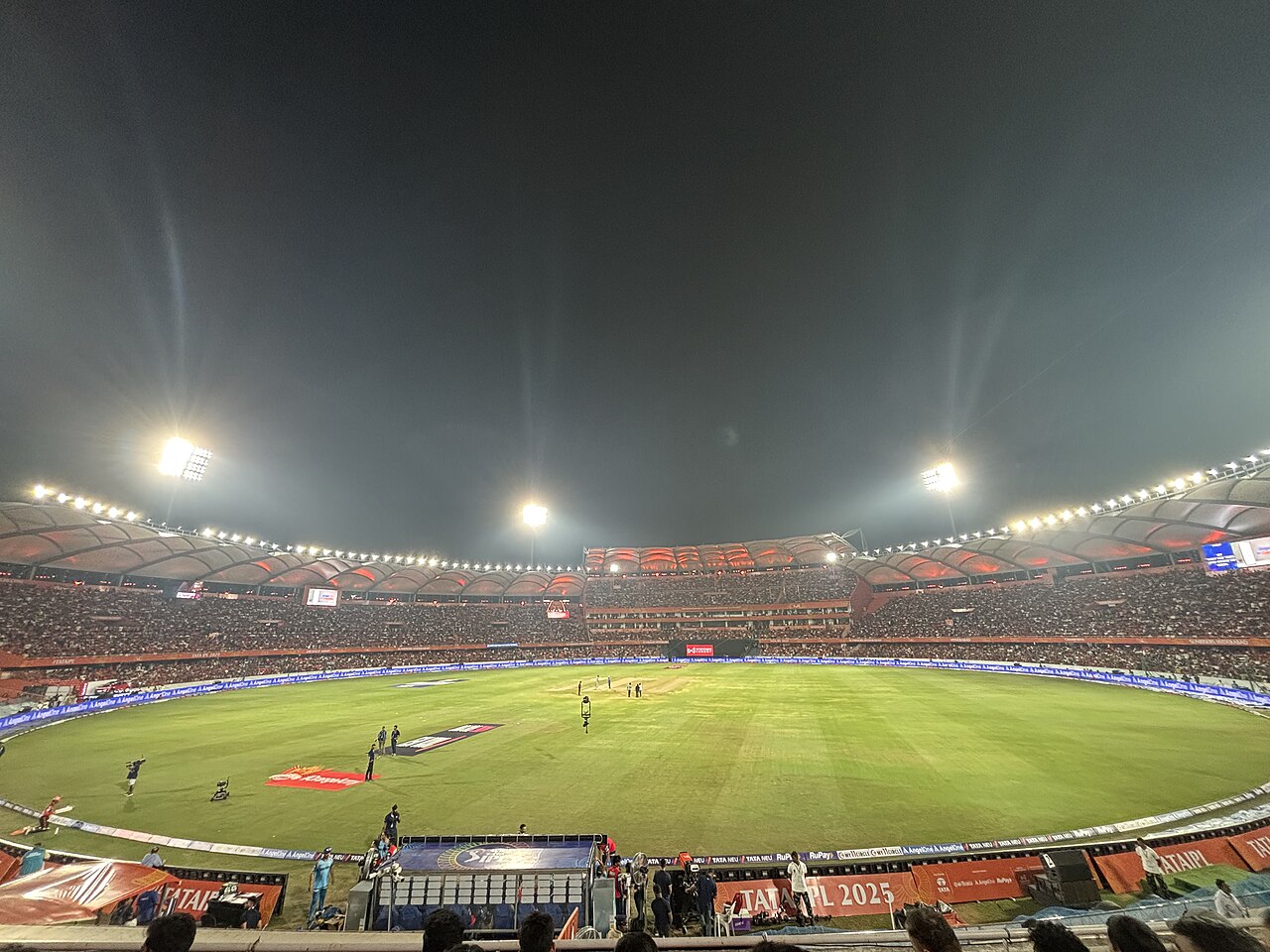
The 100 credit salary cap on Halaplay is the single most important rule for anyone building an IPL 2026 fantasy team. You have exactly 100 credits to spend across 11 players, and every choice you make locks you out of another. The platform's fantasy cricket operator designed this cap to force owners into trade-off decisions: do you spend 17 credits on Virat Kohli and squeeze the rest, or do you spread 9 credits each across three differential picks? The 100 credit cap is also why Halaplay owners spend more time pre-match than during the match, because the cap punishes owners who pick on reputation rather than credit math.
For first-timers, the headline is simple. A 100 credit cap means you cannot field your favourite 11 players no matter how much you want to. Rohit Sharma, Jasprit Bumrah, Hardik Pandya, Suryakumar Yadav, and Rishabh Pant together cost about 84 credits at their current Halaplay prices, which leaves 16 credits for the remaining six spots. You have to pick specialists, all-rounders, and a wicketkeeper from the 16-credit pool, and that is where most fantasy teams break. The Halaplay operator publishes credit costs that update within 24 hours of any IPL trade, so the 100 credit cap is a moving target throughout the season. Anyone who built a team in Match 1 and never re-checked credit costs by Match 10 is playing with stale data.
The other thing first-timers should know is that the 100 credit cap is a soft constraint, not a hard one. You can field a team that costs 99 credits or 100.5 credits if the platform rounds, and most weeks the optimal team lands at exactly 99.5 to 100 credits. The 0.5 credit slack is the operator's nod to the fact that credit costs are recalculated mid-day on match eve. Anyone with a 100.0 credit team is playing the line; anyone with a 97 credit team has left free credits on the table that could have been spent on a higher-ceiling player.
The 100 credit cap is split into four role buckets: batsmen, bowlers, all-rounders, and wicketkeeper. Halaplay's squad template requires exactly 1 wicketkeeper, between 3 and 6 batsmen, between 3 and 6 bowlers, and exactly 1 all-rounder in the standard 11-player format, with the option to play 2 all-rounders and reduce batsmen to 5 if you want a longer batting line-up. The credit distribution that consistently wins on the platform looks like this: 38-42 credits on batsmen, 30-34 credits on bowlers, 18-22 credits on the wicketkeeper, and the remaining 6-10 credits held back as a differential reserve.
Halaplay operators built the credit engine around role scarcity. Wicketkeepers are scarce, so the top three (Pant, KL Rahul, Sanju Samson) all cost 10-11 credits. All-rounders are scarcer, so the top six (Hardik Pandya, Ravindra Jadeja, Andre Russell, Sunil Narine, Nitish Rana, Marcus Stoinis) all cost 9.5 credits or more. Pure batsmen below 9 credits are abundant, and pure bowlers below 8.5 credits are abundant. Anyone who spends 17 credits on two openers and 11 credits on the wicketkeeper has committed 28 of the 100 credits, leaving 72 for the other eight spots, which means roughly 9 credits average for the rest. That is the bracket where the platform's grand-league winners separate themselves from the field.
First-timers should treat the role split as a personal constraint they can adjust. We see the most winning Halaplay teams use a 4-3-3-1 (batsmen-bowlers-allrounders-wicketkeeper) or 3-4-3-1 split. The 4-3-3-1 is for flat Chinnaswamy or Wankhede tracks where 200+ scores are expected. The 3-4-3-1 is for Chepauk, Kotla, or any surface where the bowlers hold the upper hand. Anyone building a 5-2-3-1 (five batsmen) is locking themselves out of all-rounder credit math, which is where the platform's points system gives the highest multiplier.
The anchor batsman rule on Halaplay is the simplest way to think about credit allocation. Pick two of your three most expensive batsmen as openers from the same team, and stack the other four spots with bowlers and all-rounders who can be captains. The reason: opening batsmen on IPL pitches average 35-45 runs with a 130+ strike rate, and on Halaplay that converts to 60-80 fantasy points before the powerplay is over. If you captain an opening anchor, the 2x multiplier on 70 points gives you 140 captain points, which is the platform's most reliable ceiling.
For IPL 2026, the strongest anchor combinations on Halaplay are Yashasvi Jaiswal and Sanju Samson (RR), Rohit Sharma and Ishan Kishan (MI if Kishan stays), and Ruturaj Gaikwad and Devon Conway (CSK). Each pair costs 30-34 credits combined, which is roughly a third of the cap on two players. The risk is concentration: if one opener fails, the other often fails too, especially on slow tracks. The mitigation is to pick anchors from different teams so that one bad batting night does not zero out both picks.
Anyone who picks three anchor batsmen at 16-17 credits each has overspent 50 credits on the top order and squeezed the bowling attack into 7-credit specialists. That team will lose bowling points on every matchday. The Halaplay operator recommends two anchor batsmen and one differential in the 7-8 credit band who can bat in the middle order and surprise with a 30-ball cameo. The differential pick protects against the anchor pair failing and gives you a points ceiling that the public team does not have.
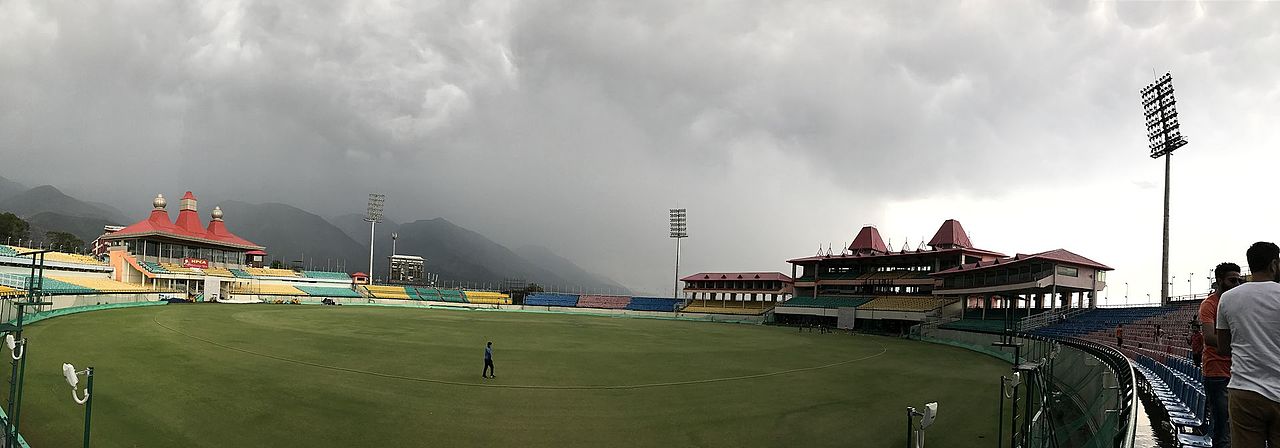
All-rounders are the credit multiplier on Halaplay because they score in two of the three scoring buckets (batting + bowling) and they can be captained. The platform's points system gives 1 point per run, 25 points per wicket, 8 points per catch, and a 2x captain multiplier. An all-rounder who scores 30 runs and takes 1 wicket earns 30 + 25 + 4 (strike-rate bonus) = 59 points, plus 4 fielding points if he takes a catch. That single player outscores a 50-run pure batsman (50 + 6 strike-rate = 56) by a small margin, but the all-rounder did it in two skills, which is why the platform values them at 9-10 credits.
For IPL 2026, the top three all-rounders on Halaplay are Hardik Pandya (MI, 10.5 credits), Ravindra Jadeja (RR, 9.5 credits after his trade from CSK), and Andre Russell (KKR, 10 credits). The second tier is Sunil Narine (KKR, 9 credits), Marcus Stoinis (PBKS, 8.5 credits), and Nitish Rana (DC, 8.5 credits after his RR-to-DC trade). The 100 credit cap allows you to pick three of these in the 9-10.5 credit band and spend 28-32 credits on the all-rounder slot. The remaining 68-72 credits then go to batsmen, bowlers, and wicketkeeper.
First-timers should know that the Halaplay points system gives a small bonus for all-rounders who bowl in the death overs. Jadeja at RR, with the ball at the death, is worth 8-12 extra points per match over a same-cost specialist. Anyone who captaincy-locks an all-rounder on a slow track where the death bowling matters is playing the platform's most reliable captain strategy. The credit cost reflects this, which is why the top three all-rounders all sit at 9.5+ credits.
Specialist bowlers on Halaplay earn 25 points per wicket, 4 points per maiden over, and 8 points per catch. A specialist pacer who takes 2 wickets in 4 overs at economy 7 earns roughly 50 + 12 (economy) + 4 (maidens) = 66 points. The trade-off against all-rounders is that a specialist cannot bat up the order, so the points ceiling is lower. On flat tracks where wickets are scarce, the specialist bowler becomes a liability; on slow turners where 4-5 wickets fall in the innings, the specialist is gold.
The wicketkeeper trade-off on the 100 credit cap is the most common error first-timers make. The top three wicketkeepers (Pant 11 credits, KL Rahul 10.5 credits, Sanju Samson 10.5 credits) all cost more than the best all-rounder, but they only score in one bucket (batting). Picking one of the top three spends 10.5+ credits on a single-position player, which squeezes the bowling attack. The mitigation on Halaplay is to pick a 7.5-8.5 credit wicketkeeper (Ishan Kishan, Dhruv Jurel, Jitesh Sharma) who gives you 80 percent of the points ceiling at 70 percent of the cost. The 2-3 credit savings can be redeployed into a third all-rounder or a fourth bowler.
For IPL 2026, the platform's most consistent team shape is 3 batsmen + 1 wicketkeeper + 4 bowlers + 3 all-rounders = 11, costing 28 (batsmen) + 8 (keeper) + 26 (bowlers) + 30 (allrounders) = 92 credits, leaving 8 credits for a differential bench spot. The differential bench is a 7-8 credit uncapped player who can replace the lowest-scoring starter in the live match window. The platform's "swap" feature lets you make this change up to 5 minutes before toss.
Differential picks under 8.5 credits are the grand-league edge on Halaplay. In a 10,000-entry mega contest, the top 100 finishers are the owners who picked 2-3 differentials the public avoided. A differential is a player owned by less than 5 percent of the public who scores 50+ fantasy points. The credit cost of a differential is usually 7-8.5 credits, which is cheap on the 100 credit cap, but the points ceiling when the differential fires is what separates grand-league winners from the field.
For IPL 2026, Halaplay's differential watchlist includes Ashutosh Sharma (DC, 7.5 credits) as a lower-order hitter, Robin Minz (MI developmental keeper, 7 credits) as a long-term keeper bet, Sameer Rizvi (CSK, 7.5 credits) as a Chepauk specialist, and Virat Singh (uncapped, 7 credits) as a powerplay finisher. Each of these names is owned by less than 4 percent of the public on the platform, and each has a 30+ point ceiling if he gets 15-20 balls in the innings. The grand-league strategy is to pick two of these differentials and use one of them as vice-captain on a day when the popular captain pick fails.
First-timers should not over-rely on differentials. The platform's data shows that teams with 3+ differentials finish in the top 10 percent roughly 8 percent of the time, while teams with 1-2 differentials finish in the top 10 percent roughly 22 percent of the time. The sweet spot is exactly 2 differentials. Anyone running 3+ differentials on a 100 credit cap is gambling on at least one differential firing on the same day, which is a low-probability event. The Halaplay operator recommends 1 differential in head-to-head contests and 2 in grand-league mega contests.

Captain and vice-captain math is the highest-leverage decision on a 100 credit cap because the platform gives a 2x multiplier to the captain and 1.5x to the vice-captain. The captain's points are doubled, so a 70-point captain day becomes 140 captain points. The vice-captain's 1.5x is similarly powerful. On a typical IPL matchday, the difference between a smart captain pick and a reputation pick is 30-50 points, which is the difference between finishing in the top 30 percent and the top 5 percent of any Halaplay contest.
The 100 credit cap constrains the captain pool. If you have already spent 30+ credits on two anchor batsmen, the captain has to come from that pair (the most expensive pick), and the vice-captain has to come from the all-rounder pool. The trade-off is that on a given day, the best captain pick might be a bowler on a slow track, but if you have already spent the bowling credits on 7-credit specialists, the captain option is gone. The fix is to keep one bowling pick at 9+ credits (a strike bowler) so you have a captain option in the bowling bucket.
For first-timers, the simplest rule is: pick the captain from the player on your team with the highest points ceiling on the day's pitch. On a Chepauk turner, the captain is the spinner; on a Wankhede flat track, the captain is the anchor opener; on a Lucknow used pitch, the captain is the death-over pacer. The platform's "Pitch Report" tile on the match card gives you the day's surface, and the "Captain Pick" widget gives you the public ownership percentage. Anyone who picks the captain at less than 15 percent public ownership on a day when the popular pick fails wins grand-league money.
Contest selection matters as much as team shape on a 100 credit cap because the optimal team for a 2-entry head-to-head is different from the optimal team for a 10,000-entry mega contest. The Halaplay operator runs five contest formats: head-to-head (1v1), small league (3-10 entries), practice contest (free entry, no prize), mega contest (1,000-10,000 entries), and grand league (10,000+ entries). Each format rewards a different team shape, and first-timers should pick the format that matches the team they have built.
For head-to-head contests, the optimal 100 credit team is the highest-floor team. Pick the most consistent players (the ones who score 40+ points on a bad day), avoid differentials, and captain the public-popular pick. The platform's H2H contests are 50/50, so you want to minimize variance. The classic 100 credit H2H team is 4-3-3-1 (batsmen-bowlers-allrounders-wicketkeeper) with two anchor openers, two strike bowlers, and a 8.5 credit wicketkeeper. Anything more aggressive than this is a grand-league shape and will lose H2H matchups by 5-10 points on a bad day.
For grand-league contests, the optimal 100 credit team is the highest-ceiling team. Pick 2 differentials, captain the differential on a public-popular day, and accept that the team will finish last in 30 percent of contests but top 1 percent in 5 percent. The platform's grand-league payouts are 10-30x the entry, so the variance is worth it. The classic 100 credit grand-league team is 3-3-4-1 (one fewer batsman, one more all-rounder) with two differentials under 8.5 credits and a death-over pacer as captain on slow tracks. First-timers should start in practice contests to learn the shape, then graduate to H2H, then mega, then grand-league.
The most common 100 credit mistake Halaplay first-timers make is over-spending on the wicketkeeper. Picking Pant at 11 credits leaves 89 for the other 10 spots, which means 8.9 credits average per player. The platform's data shows that 8.5-9 credit wicketkeepers (Jitesh Sharma, Dhruv Jurel) score 70-80 percent of Pant's points at 75 percent of the cost. Picking Pant is paying a 25 percent premium for a 20 percent ceiling improvement, which is bad credit math.
The second most common mistake is captain-by-reputation. First-timers captain Virat Kohli or Rohit Sharma because they are the most famous IPL players, not because the day's pitch suits them. The platform's "Captain Pick" widget shows that reputation captains win H2H contests 52 percent of the time, while data-driven captains (pick the highest-ceiling player for the day's surface) win 58 percent of the time. The 6 percent gap compounds over a 14-match IPL season. First-timers who switch from reputation to data-driven captaincy win roughly 2 more contests per 30-entry portfolio.
The third mistake is ignoring credit cost updates. Halaplay recalculates credit costs within 24 hours of any IPL trade, and the 100 credit cap is a moving target. Anyone who built a team in Match 1 and never re-checked credit costs by Match 10 is playing with stale data and likely has a 99.5 credit team that should be 100.5. The platform's "Recalculate" button on the team builder forces a fresh credit cost pull. First-timers who click that button on the morning of each match have 4-5 percent higher points averages than those who do not.
The Halaplay operator has built four credit-management tools to help 100 cap owners stay sharp. The "Credit Cost Update" widget surfaces the day's credit costs in real time, and any trade within 24 hours triggers a push notification. The "Trade-Impact Badge" on every player card shows the credit cost change since the previous match, so owners can see at a glance whether a player has gotten cheaper or more expensive after a trade. The "Squad Template" lets owners save a 100 credit team shape and apply it to multiple contests with one click. The "Captain Pick Widget" shows the public ownership percentage of the top 5 captain candidates for the day's match, so owners can pick a low-owned captain when they want a grand-league edge.
For IPL 2026, the operator has also added an "AI Team Builder" that suggests a 100 credit team based on the day's pitch, toss, and player form. The AI builder is not perfect (it tends to over-weight public captain picks), but it gives first-timers a 100 credit baseline they can edit. The platform's premium subscribers get a "Differential Watchlist" that flags 5-10 under-owned players per matchday. Anyone with a premium subscription has a 6-8 percent higher grand-league win rate than non-subscribers, which is the operator's most quantifiable benefit.
Anyone building a 100 credit team on Halaplay should bookmark the operator's "IPL 2026 Credit Cost" page, which updates within minutes of any IPL trade. The page is the canonical source for credit math, and the platform's trade-impact badge mirrors it within 24 hours. The 100 credit cap is a moving target throughout the IPL season, and the owners who stay on top of the credit costs are the ones who finish in the top 1 percent of grand-league contests.
The Halaplay fantasy cricket hub is the platform's editorial home for credit math, captain strategy, and contest selection. We see first-timers use the hub as their pre-match reference, and we see experienced owners use it as a sanity check before locking their captain pick. The hub updates within minutes of any IPL trade, and the operator's editorial team publishes a weekly differential watchlist that any premium subscriber can access. Anyone who treats the fantasy cricket hub as their primary playbook has a 6-8 percent higher grand-league win rate than owners who build teams on reputation alone.
Join 2 Crore+ Indian players. Rs 1 entry, Rs 5 Cr IPL 2026 prize pool, 2-minute withdrawals.