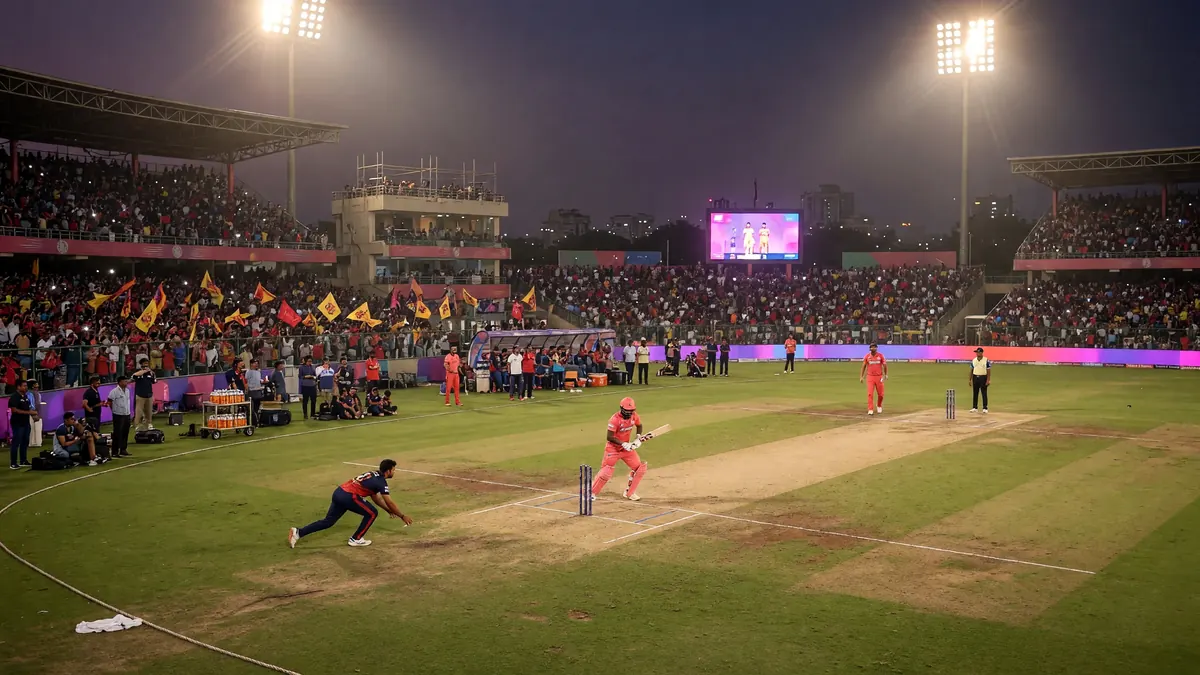
Friday, 10 April 2026, carried a clean fantasy brief for IPL Match 16. Rajasthan Royals and Royal Challengers Bengaluru both arrived in Guwahati unbeaten — Royals on three wins, RCB on two — and the 7:30 PM IST start at Barsapara Cricket Stadium put two in-form top orders on a surface that previews described as batting-friendly with true bounce. The original Dream11-facing write-up published that afternoon was a classic pre-lock-in package: form notes, pitch and weather, captain options, and a full suggested XI. Months later, the same package still reads as a useful case study in how early-season IPL fantasy slates were built when both sides still carried perfect records.
This is not a live preview. It is a dated retrospective of the Match 16 brief as it stood on 10 April 2026. The facts below stay inside that pre-match record — who was in form, how Guwahati was expected to play, which names filled the suggested XI — so managers reviewing old slates can separate what the night promised from whatever the scoreboard later confirmed.
Why Match 16 Mattered On The Early Table
Unbeaten meetings compress the fantasy problem. When both clubs still sit on clean win columns, ownership clusters around the same premium names and the differential edge has to come from role clarity rather than from a struggling side's forced reshuffle. Royals entered Match 16 with three victories; RCB entered with two. That balance removed the usual "chase the underdog upside" shortcut and forced managers to price Powerplay control, middle-order acceleration, and death-over seam on equal footing.
Guwahati added a second pressure layer. Barsapara is not a default IPL fortress for either franchise in the way Jaipur or Bengaluru can be, so the brief leaned on venue behaviour rather than home muscle memory. The 7:30 PM IST window also mattered: evening starts in the north-east bring humidity, possible early moisture for seamers, and dew that can tilt the second innings toward the chasing side. For fantasy cricket managers, those three environmental notes — true bounce, early seam, late dew — were the real board shape behind the player shortlists.
The broader early-season context was simple. Both sides still had room to lose without collapsing the table, but neither wanted the first defeat to arrive against a peer that was also undefeated. That competitive tension is why Match 16 attracted a dense captaincy conversation around Kohli, Jaiswal, and the middle-order accelerators rather than a one-sided "stack the favourite" read.
Barsapara Pitch And Weather As They Were Read That Day
The Guwahati pitch was described as batting-friendly with true, consistent bounce and easier scoring once the lights took over. First-innings averages were framed around 165–170, a band that rewards top-order strike without turning every contest into a 200-plus free-for-all. Slight early seam movement was expected, especially while any residual moisture sat in the surface, then the deck was expected to settle into a true stroke-making track.
Weather notes for the evening cited cloud cover and the chance of light rain later, with lower risk once the match settled into the night session. Humidity was high. That combination usually hands the new-ball pair a short window: hit a hard length early, then watch the surface flatten. Dew was flagged as a second-innings factor that could favour chasing teams, both by skidding the ball on and by making grip harder for spinners who need the older ball to bite.
For fantasy construction, those notes translated into three practical rules. First, openers and Powerplay hitters held elevated floors because the bounce was expected to come on. Second, premium seamers still justified a slot if they bowled with the new ball rather than only at the death. Third, chasing-side batters carried a quiet ownership bump whenever the toss pointed toward bowling first under lights. None of that required inventing a mystery spinner or fading every seamer; it required matching role to phase.
Royals Form Lines That Drove Ownership
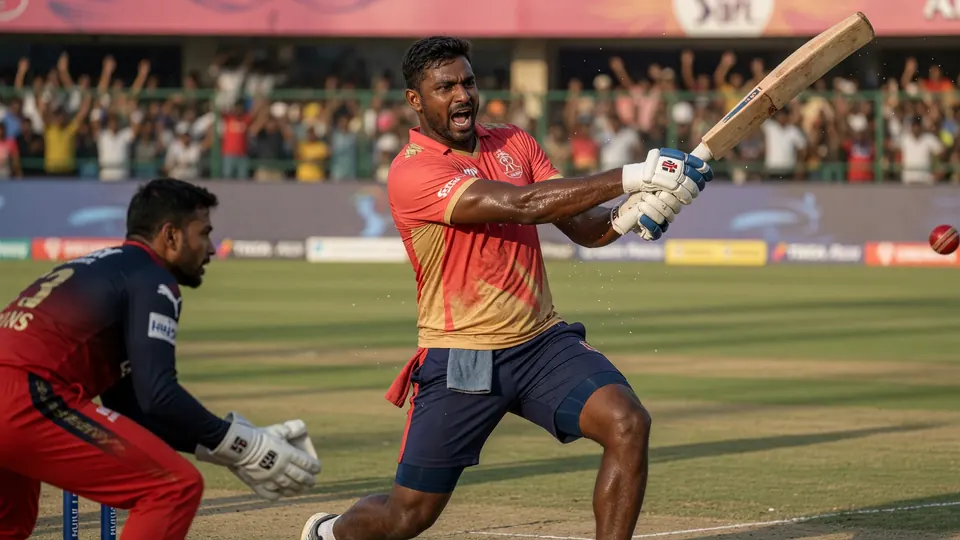
Yashasvi Jaiswal sat at the centre of the Royals batting brief. He was framed as the side's most consistent batter and had just posted an unbeaten 77 in the previous fixture, a knock that reinforced his role as the top-order Powerplay controller. In fantasy terms, that combination — recent ceiling plus structural role — is what pushes a batter from safe inclusion into captain conversation. Jaiswal's left-hand angle against RCB's new-ball pair also mattered on a surface expected to offer true bounce rather than sharp seam late.
Vaibhav Sooryavanshi was presented as the aggressive Royals Powerplay partner. Where Jaiswal's value sat in control and carry, Sooryavanshi's value sat in early boundary rate. On a Guwahati deck with easier scoring under lights, that role is not ornamental: the first six overs often decide whether a 165 template becomes a 180 template. Managers who wanted Royals stack exposure without double-captaining the same style of batter often split the pair — Jaiswal as the floor, Sooryavanshi as the ceiling.
Behind the openers, Dhruv Jurel appeared both as a wicketkeeping option and as a middle-order differential. Jurel's dual role is the classic salary-cap lever: keepers who bat in the top six can clear the points floor even on quiet keeping nights. Riyan Parag filled the all-rounder spine in the suggested side, giving Royals a second path to points if the batting order compressed. Romario Shepherd's all-round brief sat on the other side of the balance sheet — lower ownership than a pure batter, with bowling overs still available if the match stayed in the 165–170 band rather than exploding.
RCB Names That Anchored The Opposite Stack
Virat Kohli was listed as RCB's top-order anchor and a primary captaincy option. That is the standard early-season Kohli fantasy profile: high floor through strike rotation, elevated ceiling when the Powerplay is negotiated cleanly, and captain multiplier gravity because ownership concentrates whether managers like it or not. On an unbeaten RCB side facing another unbeaten club, Kohli's role was less about "must-win hero ball" and more about setting the chase or defending a 165-plus board without early collapse.
Devdutt Padikkal arrived with consecutive half-centuries at No. 3 and the extra narrative of facing his former franchise. Form plus familiarity is a dangerous combination for ownership models: the consecutive fifties justified the pick on pure numbers, while the former-team angle inflated conversation without changing the underlying role. At No. 3 on a true surface, Padikkal's job was to convert the Powerplay platform into a middle-overs climb, which is exactly where vice-captain multipliers often land when openers are already saturated.
Rajat Patidar was highlighted for middle-order acceleration and spin-hitting against a Royals attack expected to lean on spin through the middle. That matchup note is specific. If Royals planned to squeeze overs 7–15 with spin, Patidar's ability to hit with the spin or clear the longer straight boundary became the RCB counter. Differentials around the RCB core included Tim David for late finishing, Ravi Bishnoi for leg-spin wickets and economy, and Bhuvneshwar Kumar for new-ball control if early moisture lingered under the cloud cover.
The Suggested Dream11 XI From The 10 April Brief
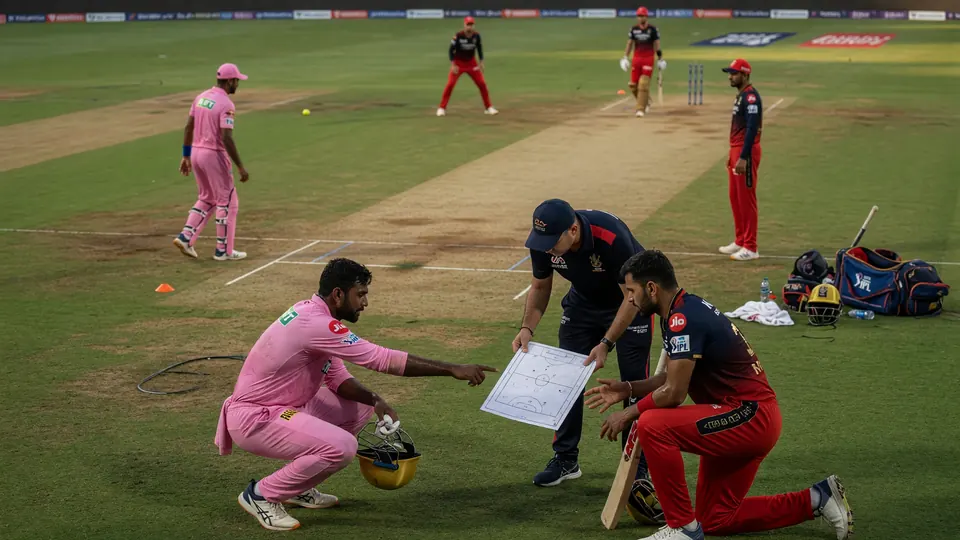
The published suggested side used a clear structure. Phil Salt and Dhruv Jurel filled the wicketkeeping slots. The batting core listed Virat Kohli as captain, Yashasvi Jaiswal as vice-captain, then Devdutt Padikkal and Vaibhav Sooryavanshi. All-round balance came from Riyan Parag and Romario Shepherd. The bowling three were Ravi Bishnoi, Bhuvneshwar Kumar, and Jacob Duffy.
Read as a construction, not a celebrity list, the XI tells a coherent story. Two keepers lock dual-path points. Kohli and Jaiswal lock the two highest-trust top-order floors and take the multipliers. Padikkal and Sooryavanshi supply form and Powerplay upside without forcing a third premium captain. Parag and Shepherd keep the side from becoming a pure batter stack if the match slows. Bishnoi covers the spin phase Royals were expected to force; Bhuvneshwar covers the early seam window; Duffy adds overseas pace depth on a night when humidity could help the new ball for a few overs.
Captain Kohli and vice-captain Jaiswal was the safety-first multiplier pair. It accepted crowded ownership in exchange for two batters whose roles survived toss variance. Managers building grand-league variance could flip the multipliers — Jaiswal captain on Royals Powerplay dominance, or Padikkal captain on the consecutive-fifty streak — but the published brief stayed with the higher-floor Kohli–Jaiswal axis. That choice matches an unbeaten-versus-unbeaten night where blowing up the slate for a 4% ownership captain was optional, not mandatory.
Differentials And The Quiet Edges Around The Core
Beyond the headline XI, the brief flagged several names as differentials rather than defaults. Dhruv Jurel already sat inside the suggested side, yet his ownership often lags pure batters, which is why he still functions as a soft differential even when selected. Tim David offered the classic finisher profile: fewer balls, higher strike, and a path to outscoring a top-order name if the death overs inflated. Ravi Bishnoi's value sat in matchup — leg-spin into a middle order that might be forced to manufacture against spin on a true but not lightning-fast deck.
Bhuvneshwar Kumar's differential case was environmental. On dry afternoons he can look like a pure new-ball specialist with a short window; under Guwahati humidity with possible early moisture, that window widens. Jacob Duffy's inclusion similarly leaned on conditions more than brand recognition: overseas seam on a night start, with the chance that the first spell decided whether 165 was defendable.
The important retrospective lesson is how those differentials were framed. They were not random low-owned names. Each one mapped to a phase of the match the pitch and weather notes had already described — Powerplay seam, middle-overs spin, death finishing, dual-role keeping. That is still the cleanest way to build variance on Halaplay: start from the board shape, then ask which lower-owned player owns that phase.
Captain Math For An Unbeaten Clash
Captain selection on 10 April 2026 clustered around three logics. The first was the anchor logic: Kohli as captain because his floor survives a quiet Powerplay if he bats through. The second was the Powerplay-controller logic: Jaiswal as captain or vice-captain off the back of the unbeaten 77 and his role at the top. The third was the form-streak logic: Padikkal as a lower-owned multiplier after consecutive half-centuries at No. 3, especially with the former-franchise subplot inflating attention without guaranteeing ownership.
Small-field and head-to-head contests favoured the first two logics. When one mistake ends the ticket, the multiplier should sit on the batter most likely to face 20-plus balls. Grand-league contests could justify Padikkal or even a pure differential such as Patidar if the Royals spin plan was expected to dominate the middle and RCB needed a left-field accelerator. Sooryavanshi captaincy was the highest-variance Royals path: enormous if the Powerplay exploded, fragile if the new ball won the first three overs.
Vice-captain construction mattered almost as much. Pairing Kohli (C) with Jaiswal (VC) diversified franchise exposure while keeping both multipliers inside the top order. Pairing Kohli with Padikkal concentrated RCB risk. Pairing Jaiswal with Parag moved one multiplier into all-round territory if managers expected a sticky middle. None of those pairs required predicting the winner; they required predicting who would own the balls.
How The Brief Still Teaches Fantasy Construction
Retrospectives are only useful if they leave a transferable method. The Match 16 package still does. Begin with table context: two unbeaten sides meant ownership would cluster, so edge had to come from role and venue, not from fading a collapsing favourite. Read the surface in phases: early seam, true middle, dew-aided chase. Map players to those phases before opening the salary screen. Only then place multipliers on the names whose roles survive toss variance.
The suggested XI remains a clean template for similar nights later in the season. Two keepers when dual-role value exists. Two trusted openers or anchors on the multipliers. One form batter at No. 3. One aggressive Powerplay partner. Two all-rounders who actually bowl. Three bowlers split between new-ball seam and middle-overs spin. That skeleton does not depend on Royals or RCB branding; it depends on a 165–170 Guwahati template with humidity and dew.
What the brief deliberately did not do is also instructive. It did not invent injury drama beyond the named form notes. It did not promise a 220-run shootout on a ground averaged near 165–170. It did not force every differential into the core XI. Restraint is part of professional fantasy writing: the ceiling stays honest so the floor stays usable.
Legacy Of The 10 April Guwahati Slate
Months on, Match 16's pre-match conversation still earns a place in the early IPL 2026 archive because it captured a specific moment: two unbeaten line-ups, a north-east night start, and a fantasy slate built around Jaiswal's control, Kohli's anchor role, Padikkal's streak, and a bowling mix tuned to moisture then dew. Whether individual picks cleared their projections is a separate scoreboard question. The construction logic remains sound for any later Barsapara night that advertises true bounce, a 165–170 first-innings band, and chase-friendly dew.
For managers studying old Halaplay contests, the durable takeaway is narrower than "stack Royals" or "captain Kohli every time." It is this: when both sides are undefeated, price the venue phases first, then let form notes fill the roles those phases create. Jaiswal's unbeaten 77 mattered because the pitch rewarded Powerplay control. Patidar's spin-hitting note mattered because Royals were expected to bowl spin through the middle. Bishnoi and Bhuvneshwar mattered because the same surface offered two different bowling windows on the same night.
That is the legacy worth keeping from the 10 April 2026 brief. Not a frozen XI to copy blindly into 2026's later weeks, but a worked example of how an IPL fantasy slate should look when the table is tight, the lights are on in Guwahati, and the only honest edge is matching players to the ground in front of them.
Frequently Asked Questions
When was the RR vs RCB IPL 2026 Match 16 Dream11 preview published?
The source preview was published on 10 April 2026 ahead of IPL Match 16 between Rajasthan Royals and Royal Challengers Bengaluru at Barsapara Cricket Stadium, Guwahati, with a scheduled 7:30 PM IST start. This article is a retrospective of that pre-match brief, not a live team sheet.
What was the Barsapara pitch expected to do that night?
Previews described a batting-friendly Guwahati surface with true, consistent bounce, slight early seam movement, easier scoring under lights, and a typical first-innings band around 165–170. Dew was expected to favour chasing sides later in the evening.
Who were the suggested captain and vice-captain?
The suggested Dream11 side listed Virat Kohli as captain and Yashasvi Jaiswal as vice-captain, pairing RCB's top-order anchor with Royals' most consistent batter and Powerplay controller after Jaiswal's unbeaten 77 in the previous game.
Which players filled the full suggested fantasy XI?
Wicketkeepers: Phil Salt and Dhruv Jurel. Batters: Virat Kohli (C), Yashasvi Jaiswal (VC), Devdutt Padikkal, Vaibhav Sooryavanshi. All-rounders: Riyan Parag and Romario Shepherd. Bowlers: Ravi Bishnoi, Bhuvneshwar Kumar, Jacob Duffy.
Which names were framed as differentials around that core?
Differentials highlighted in the brief included Dhruv Jurel's dual-role upside, Tim David's finishing ceiling, Ravi Bishnoi's middle-overs leg-spin, and Bhuvneshwar Kumar's new-ball value if early moisture and humidity helped seam.