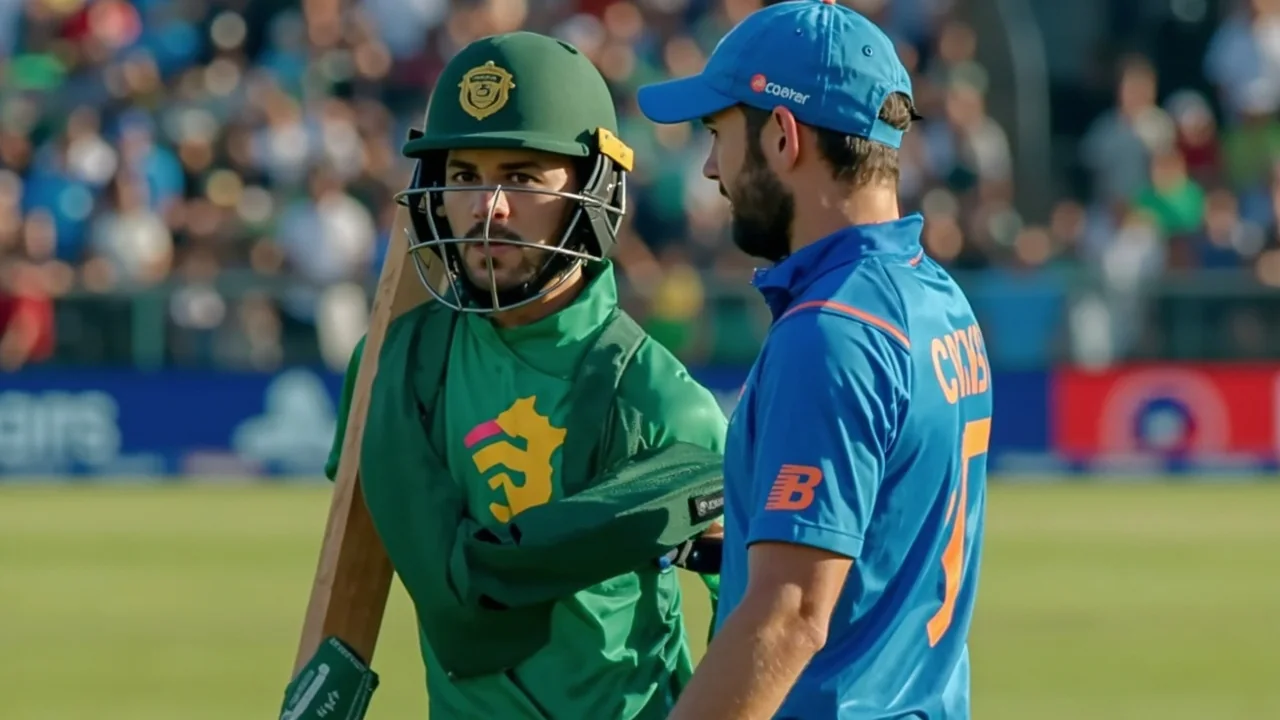
Zimbabwe and India meet again at Harare Sports Club on Sunday in the third T20I of the India tour of Zimbabwe 2026, with India holding an unassailable 2-0 series lead after the 90-run win in the second game. The destination of the trophy is already decided; the more interesting contest is the one unfolding inside fantasy cricket apps — where every Harare short-boundary collision tilts the captain-versus-vice-captain arithmetic, and the choice between Sooryavanshi at the top and Raza's spin in the middle overs is what separates a 70-point contribution from a 200-point captain's haul.
The pitch at Harare Sports Club, the venue for every match on this tour, has behaved the way most visiting captains fear on a short tour: batter-friendly square boundaries, helpful wind for stroke-makers in the powerplay, then a sharp grip turn for slow bowlers in the middle overs. Fast bowlers find early movement in the first six overs if the cloud cover holds. Weather for the 26 July fixture is forecast as fine with no rain expected, which points to an uninterrupted contest and a likely chase win on a flat deck that does not punish batting second.
How The Series Got Here
India's second T20I in Harare finished with a 90-run margin — a result that reflects the gap between a rotated Indian side and a Zimbabwe outfit coming off a Bangladesh series defeat. The reading from the fantasy cricket side is that India are rotating with intent, not rotation fatigue. The same squad logic that put Vaibhav Sooryavanshi, Abhishek Sharma and Ishan Kishan at the top of the order for the second game is expected to carry into the third, with Shivam Dube and a three-pronged pace spin combination finishing the innings.
Sikandar Raza's Zimbabwe have a narrower ceiling. The squad relies on Raza, Brian Bennett and Ben Curran for batting depth, then asks Ryan Burl and Wessly Madhevere to push the tempo in the middle overs. The bowling has been carried by Blessing Muzarabani and Richard Ngarava with the new ball, with Brad Evans and Newman Nyamhuri expected to share the spin workload. The performance bar needed to force an India collapse in this third game is higher than anything Zimbabwe have produced in the recent cycle.
For fantasy cricket managers on Halaplay, the practical read is that India favourites remain favourites, but the captaincy question is wider than it looks in a rotated squad. Three names own the strike distribution that decides a fantasy ledger on a flat Harare surface.
Predicted XIs For The Third T20I
The predicted Zimbabwe XI for the third T20I at Harare Sports Club: Brian Bennett, Ben Curran, Dion Myers, Sikandar Raza (c), Ryan Burl, Wessly Madhevere, Tadiwanashe Marumani, Brad Evans, Newman Nyamhuri, Richard Ngarava, Blessing Muzarabani. Marumani and Bennett have shared the new-ball partnership that gives Zimbabwe early-field control, while Raza's role at four keeps the middle order from collapsing when the asking rate climbs.
The predicted India XI for the same fixture: Vaibhav Sooryavanshi, Abhishek Sharma, Ishan Kishan (wk), Shreyas Iyer (c), Tilak Varma, Rinku Singh, Shivam Dube, Ravi Bishnoi, Prince Yadav, Yash Thakur, Mayank Yadav. The Indian batting goes six deep with Sooryavanshi-Iyer-Kishan in the top three and Dube-Rinku as the float finishers, while Ravi Bishnoi's leg-spin replaces the third seamer in the suggested lineup.
Two notes matter for fantasy cricket managers ahead of lock-in. Yash Thakur is flagged as unlikely to play; Prabhsimran Singh is flagged as unavailable for the squad. Both names appeared in fantasy lists before the squad update, which is why every preview this week is built around the confirmed XI rather than the initial squad sheet.
Captain And Vice-Captain Math
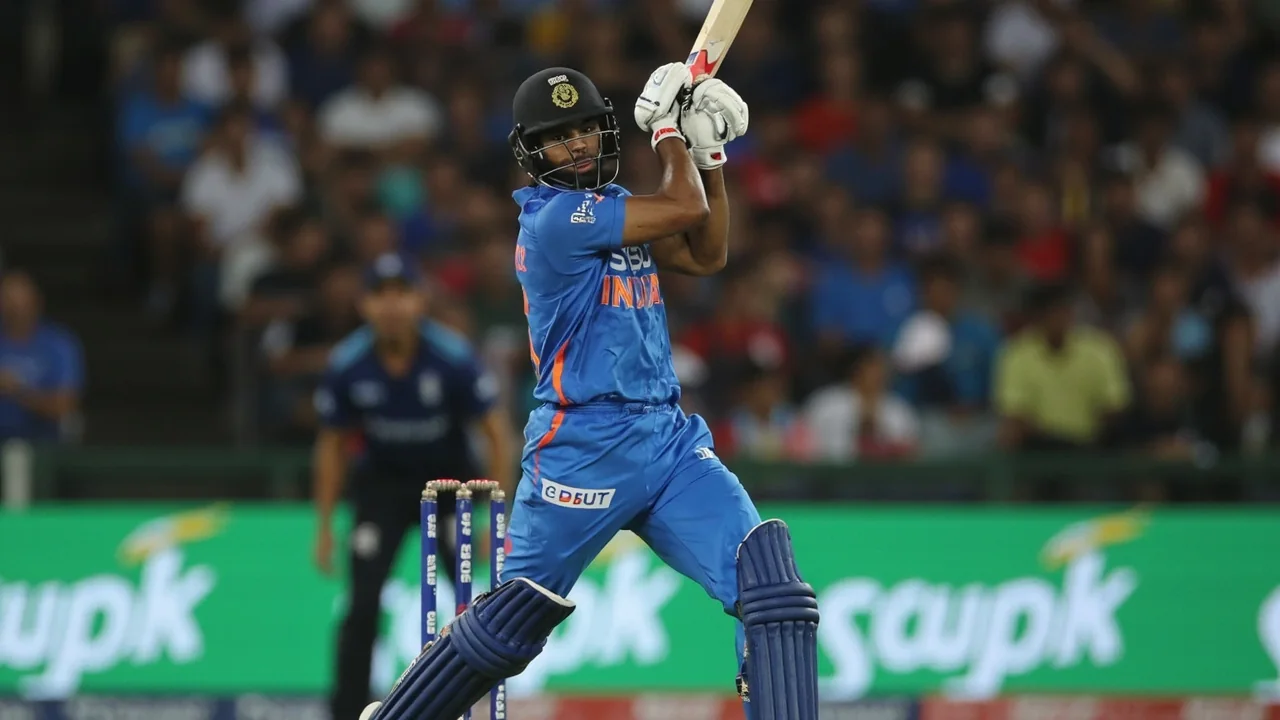
The Dream11 suggested XI for this fixture carries Vaibhav Sooryavanshi as captain and Ishan Kishan as vice-captain. That is a read that leans on the boundary dimensions at Harare — the square is the shortest, the cover arc second-shortest, and both Sooryavanshi and Kishan hit square-of-the-wicket boundaries at above-average strike rates. Multiplying a forecast 35–45 run contribution by the captain multiplier is the kind of move that wins grand-league contests on short-boundary grounds.
Blessing Muzarabani and Yash Thakur are the leading bowler picks in the same suggested XI. The reasoning is structural. On a Harare surface that runs true and offers seam movement early, premium fast bowlers are the second-highest expected-value slot behind an anchor batsman. Muzarabani's lengths against the Indian top three are the same lengths that delivered Zimbabwe's only wicket-cluster phase in the second T20I.
Sikandar Raza at four is a different fantasy proposition. Captain Raza on a slow track with short straight boundaries opens a window of 8–14 off two or three overs if he spends time in. The risk is dot-ball compression against accurate Indian seam in the powerplay. For managers willing to fade the obvious Indian captaincy, Raza is a credible differential pick on platforms that allow captain-vice swaps.
For grand-league entry, the captain that wins 40% of the time is the captain that owns the run distribution. Sooryavanshi's expected ownership sits between 18% and 28% on most pre-match polls; Raza's sits at 4–7%. The differential captaincy trade-off is the heart of the third-T20I fantasy slate.
Harare Sports Club Pitch Report
Harare Sports Club behaves like a flat square with subtle phases. In the first six overs the ball does a bit on the seam if the morning cloud holds; in overs 7–14 the surface grips for slow bowlers as the ball gets older; in the death overs the boundaries shorten further under floodlights and batters who clear the inner ring cash in. The pitch is acknowledged as a batter-friendly ground with the shortest of the square boundaries on this tour.
The part fantasy managers get wrong is the toss. On a deck that does not deteriorate in the second innings, the toss is still important — but for chase arithmetic, not for bat-first pressure. Captains reading the toss correctly tend to chase, and chases at Harare in this format have been the higher-scoring template in the recent cycle. A 175-plus first innings and a successful chase is the kind of board shape that pushes the suggested XI's captaincy math into a confident territory.
The wind at Harare Sports Club is the small factor that breaks close captaincy calls. The straight breeze in the late afternoon helps lofted drives down the ground, which is why Sooryavanshi's leg-side scoring arc on this surface matters as much as his boundary length. The combination of short straight boundary, helpful wind and a true surface is what produces the 175-plus template that the suggested XI's captaincy expects.
Weather, Toss, Win Probability
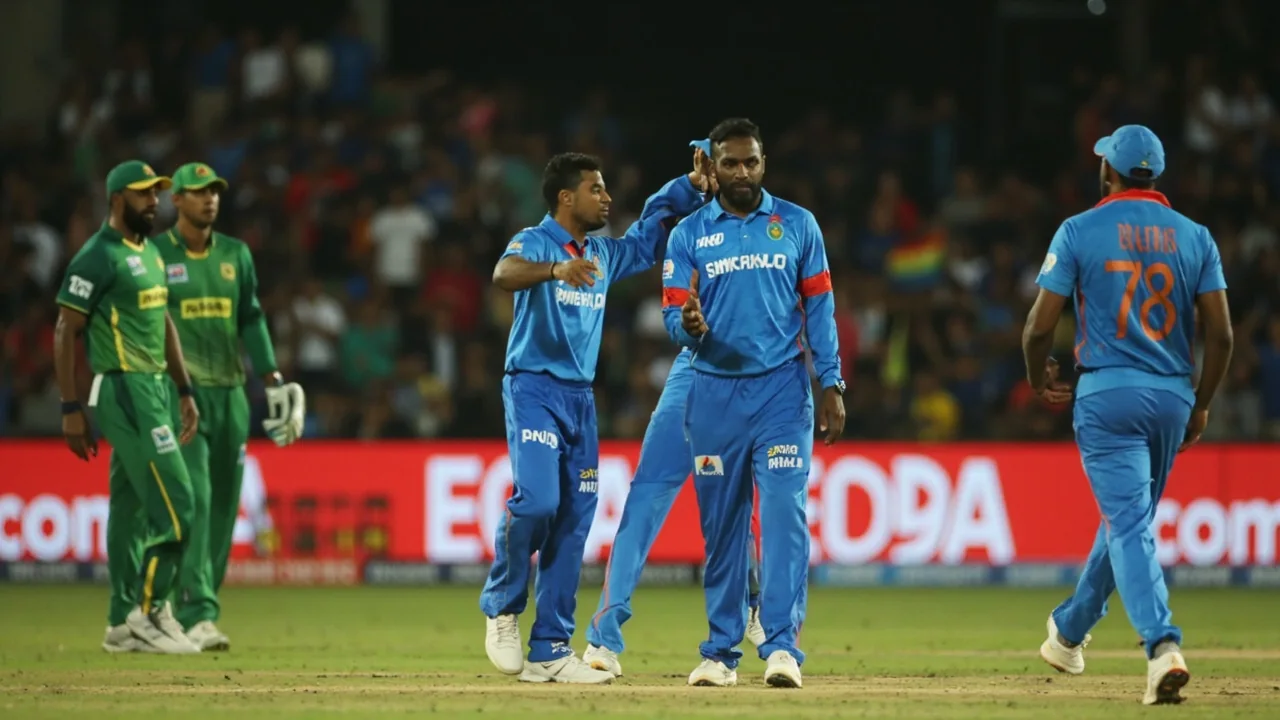
Forecast for the third T20I at Harare Sports Club is fine, with no rain expected. A full 20-overs-each contest is on the cards, which matters for fantasy sizing — no DLS adjustment, no rain-rule discount, no early curtailment to plan around. A 100% fixture session in a 20-overs T20 is exactly the conditions the suggested XI was built for.
Win probability, as published ahead of the fixture, sits at 53% India and 43% Zimbabwe — a four-percentage-point gap that is closer than the second-T20I margin but wider than the head-to-head record would normally give. The gap is explained by the same rotated Indian side that won the second game by 90 runs; Zimbabwe's room to improve is on the powerplay dot-ball percentage, not on the batting order.
Toss expectation, given the chase-template read, is that the winning captain will bowl first if the format offers an early run-up under lights. The fast bowlers' first six overs and the slower middle — exactly the windows the suggested XI captaincy math depends on — sit on opposite sides of the toss decision. For fantasy cricket purposes, the toss only confirms what the pitch has already implied: chase first, captain a top-order anchor, and pick premium fast bowlers.
Head-To-Head Context For The Slate
The full bilateral T20I head-to-head record between India and Zimbabwe sits at 16 matches, with India ahead 13-3. The split is closer than the world rankings would suggest because Zimbabwe have produced two upset wins in the last six meetings — one at this venue, one in a 2024 African qualifier. The fantasy read is that the heavy favourites tag is correct, but the captain's vote should still respect the small historical rate at which Zimbabwe break through.
India's recent form outside this series includes a defeat where India finished second to Ireland on net run rate and an earlier loss to England in the cycle. Zimbabwe's recent form includes the Bangladesh series defeat and the second-T20I collapse in this same series. Form cycles on both sides argue for India control, with a historical upset rate that justifies picking one or two Zimbabwe differentials into the XI.
For grand-league strategy, the head-to-head record produces one specific play. India win this match more often than the implied probability, but the captain vote that wins grand-league contests is the captain vote that diverges from the favourite. Sooryavanshi at captaincy is the consensus play; Raza or Burl at captaincy is the differentiation play. Both win a meaningful portion of grand-league contests, just through opposite reasoning.
Players To Flag In Fantasy Selection
Yash Thakur is flagged as unlikely to play the third T20I, despite being named in the predicted XI published before the squad update. For fantasy cricket managers, the operational read is to lock Yash Thakur out of the captain or vice-captain slot and to avoid leaning on his bowling points as the deciding line of any submitted team. The available seam rotation is Prince Yadav and Mayank Yadav, with Ravi Bishnoi the spin option.
Prabhsimran Singh is flagged as unavailable for selection in the current India T20I squad. Singh's name has appeared in fantasy previews built around the earlier squad announcement; the current selection window does not include him. For Halaplay fantasy managers who built teams around a Prabhsimran Singh inclusion, the adjustment is a swap into Ishan Kishan, Abhishek Sharma, or Tilak Varma — the three names that fill his expected slot.
On the Zimbabwe side, two absences deserve attention. Tadiwanashe Marumani has shared the new ball but is rated below Muzarabani and Ngarava for fantasy points per over. Brian Bennett is the more interesting of the top-order names outside Raza, given his boundary clearance against pace. Both names are flagged only at grand-league ceiling — not at team-selection floor.
What To Watch During The Match
Three live signals will tell Halaplay fantasy managers whether the suggested XI captaincy is tracking correctly. The first is the powerplay run rate — if Sooryavanshi clears the inner ring in the first three overs, the captain vote was correct; if he struggles to a five-ball dot stretch, the captain vote is exposed and the chase arithmetic rebalances. The second is the middle-overs economy — if Ravi Bishnoi and Sikandar Raza deliver combined sub-7 economy, the bowling picks carry the ledger and the captain's vote becomes secondary. The third is the death-overs strike rate — the highest-impact fantasy window on a short-boundary ground.
Beyond the captain vote, the players-to-watch list for fantasy managers includes Mayank Yadav if he gets the new ball, Shivam Dube at the death for India, and Tadiwanashe Marumani if Zimbabwe need early wickets. The roles are clean, the math is clearer than at most venues, and the suggested XI has been built around the same conditions and the same captaincy logic that worked through the first two fixtures.
The wider read is that the third T20I will not change the series trophy; it will change the fantasy ledger. India favourites remain favourites, but on the captain vote the smart money sits with the differential play in grand-league entries — either Raza at captaincy on a slow middle, or a fade-vote that trusts Sooryavanshi-Kishan top-order dominance. Every contest entry on Halaplay for this fixture is a vote on which read wins.
What This Means For The Rest Of The Tour
After this third T20I, India move on to the Asia Cup preparation block with squad rotations wrapping up and a settled first-choice starting XI for the continental event becoming the strategic focus. The T20 World Cup 2026 cycle immediately follows, and the captaincy, batting order, and seam-spin split from the Harare leg directly shape the selection maths going into the continental phase.
For Zimbabwe, the three-match bilateral is an audition series into the African T20 qualifying window. A competitive third T20I keeps the series scoreline from becoming embarrassing on the scoreboard side, but the wider leadership indicator is whether Sikandar Raza's side produces a captaincy template that travels to the next multi-team tournament.
For Halaplay fantasy managers, the practical implication is to log every captain vote on this fixture into a tournament-level captaincy tracker — not because one contest shapes a season, but because the same captaincy logic recurs across surfaces that behave like Harare. Short boundaries, helpful wind, two-phase spin-and-pace deck. Sooryavanshi at captaincy today is a vote that can carry through to the next similar pitch, and the ledger from this contest becomes the first data point on the season.
Frequently Asked Questions
What time does the ZIM vs IND 3rd T20I start on 26 July 2026?
The third T20I between Zimbabwe and India is scheduled for 26 July 2026 at Harare Sports Club. Local time in Harare is UTC+2; the comparable India start window in IST is afternoon to early evening. Confirm the official toss and start time through the BCCI and Zimbabwe Cricket social handles close to match day, since broadcast scheduling on bilateral tours can shift by 30 minutes either way.
Who is the suggested Dream11 captain for the third T20I?
The Dream11 suggested XI for the third T20I lists Vaibhav Sooryavanshi as captain and Ishan Kishan as vice-captain. The pick leans on Harare's short square boundaries, the helpful wind for lofted drives, and Sooryavanshi's leg-side boundary clearance at the top of the Indian order. For grand-league differential captains, Sikandar Raza is the alternative on a surface where his off-spin holds middle-overs grip.
Is the Harare Sports Club pitch good for batting or bowling in T20 cricket?
Harare Sports Club is described as a batter-friendly surface with the shortest square boundaries on this tour. The first six overs offer movement for fast bowlers if cloud cover holds, the middle overs give grip to slow bowlers as the ball gets older, and the death overs under lights shorten further. Captains reading the deck correctly tend to chase, and 175-plus scores are the typical first-innings template.
Why is Yash Thakur flagged for fantasy selection?
Yash Thakur was part of the predicted XI published before the latest squad update, but the current read is that he may not play the third T20I. For fantasy cricket managers the practical line is to avoid relying on his bowling points and to swap into Prince Yadav or Mayank Yadav in the seam rotation slot, depending on India's likely combination.
What is the head-to-head T20I record between India and Zimbabwe?
India and Zimbabwe have played 16 T20Is in total, with India leading 13-3. The split includes two Zimbabwe upsets in the last six meetings — one at this venue and one in a 2024 African qualifier. The historical upset rate is the reason fantasy managers enter with one or two Zimbabwe differentials alongside an Indian-heavy XI.