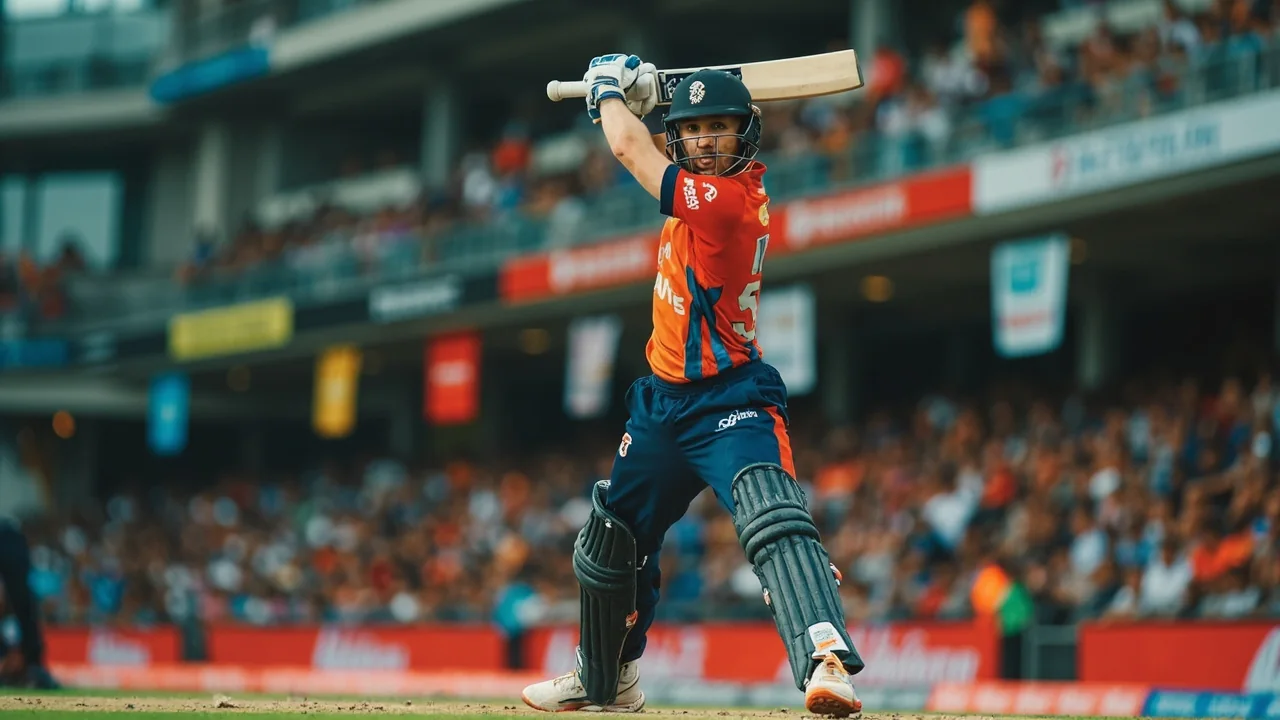
The Indian Premier League's commercial value crossed the $20 billion mark in 2026, according to the 2026 IPL Brand Valuation Study published by global investment bank Houlihan Lokey on 29 July 2026. The headline figure of $20.6 billion — roughly Rs 283 billion — represents a year-on-year increase of more than 11%, the second consecutive year of double-digit commercial-value growth for the league that began in 2008 and now runs ten franchises across the country.
Houlihan Lokey's report frames the increase inside a wider pattern of franchise-level repricing. Director Harsh Talikoti, who works in the bank's Financial and Valuation Advisory practice, said franchise valuations had reached new highs, that private investment was expanding rapidly, and that the IPL's commercial structure was diversifying beyond the traditional broadcasting-and-sponsorship core. For fantasy cricket managers building Halaplay teams through the back half of IPL 2026 and into the next auction cycle, the report adds an institutional context that is increasingly hard to ignore.
How The $20.6 Billion Figure Is Constructed
The commercial value used in Houlihan Lokey's calculation is the aggregate enterprise value the study attributes to the ten IPL franchises, weighted and combined against broadcast rights, sponsorship inventory, merchandising, and the long-tail value of the league's central contracts. The $20.6 billion headline is therefore not a single transaction price but an annualised blended mark across the franchise ecosystem as a whole, which is why the year-on-year delta — 11% in 2026 after a similar-sized move in 2025 — is the more useful trend number than the level itself.
The 11% increase is consistent with the directional read the wider sports-business market has had on the league for the last three years. Broadcast rights have re-rated as streaming inventory has matured, sponsorship categories that were previously one-deep (telecoms, paints, consumer finance) have added second-tier buyers, and franchise ownership churn has acted as a periodic price discovery event. The Houlihan Lokey study treats each of these as separate lines in the broader valuation ledger.
For a Halaplay fantasy cricket player, the construction matters because the parts of the valuation that grow fastest are also the parts that show up on screen as match-day theatre: more sponsor slots at the boundary rope, more broadcast integrations during the powerplay, more pre-match branded segments. The number itself is abstract; the visible expression of the number is something fantasy managers watch every evening.
Independent Brand Value At $4.3 Billion And The RCB Headline
The Houlihan Lokey study separates the league's brand-only valuation from the broader commercial figure. The independent brand value rose 10.3% year on year to $4.3 billion, a smaller line than the $20.6 billion headline but a cleaner read on what the IPL trademark itself commands without the franchise enterprise weight attached. That 10.3% increase sits inside a single-digit context most international sports-property brands cannot match, and it underwrites the franchise multiples used in the wider valuation.
Royal Challengers Bengaluru, the defending IPL champions, were reported as the most valuable franchise at $312 million in brand value. RCB's rise is partly cyclical — the franchise won its first IPL title in 2025 and carries the momentum of a refreshed squad into 2026 — and partly structural: the franchise sits inside one of the largest direct-spend cricket markets in the country, and its owner group has invested consistently in fan-engagement and merchandise lines that feed brand multiples.
The Talikoti commentary in the Houlihan Lokey release links the recent ownership changes around Royal Challengers Bengaluru and Rajasthan Royals to strong investor interest and to high valuations for established IPL franchises more broadly. Those two franchises have been at the centre of the 2026 ownership-cycle conversation, and the Houlihan Lokey read is that the deals that closed in 2025 and early 2026 set a price floor the wider market has since adopted.
Why Private Investment Is Expanding
Talikoti's note on private investment growing rapidly points to a structural shift in the league's ownership base. The first-generation IPL owners came largely from Indian industry houses, Bollywood families, and a small set of diversified conglomerates. The 2026 ownership cycle has seen private-equity and family-office buyers entering the cap table of multiple franchises, often as minority partners with board representation, occasionally as full owners.
Two factors make the league attractive to that buyer class. The first is the predictable cash-flow profile of an IPL franchise: central revenue distributions from the BCCI are contractually locked for the medium term, the salary cap keeps player-cost inflation in check, and the broader auction mechanism turns roster-building into a discrete annual event rather than a continuous negotiation. The second is the league's distribution reach: a single IPL fixture now reaches more concurrent viewers than most cricket properties globally, and the inventory attached to that reach is being repriced by the broader sports-advertising market.
For Halaplay users, the ownership base has a less direct but visible effect on the league. New owners typically inject capital into franchise infrastructure, which shows up as better practice facilities, broader coaching teams, more sophisticated analytics departments, and a higher share of overseas players in the squad. Those inputs feed the player pool that fantasy managers select from, and a richer ecosystem produces a deeper pool of viable captain picks across the IPL 2026 fixture list.
What $20.6 Billion Means For The Match-Day Product
The IPL's match-day product has been a beneficiary of the league's commercial trajectory for several cycles, but the 2026 numbers suggest the ceiling has not yet been reached. Sponsorship category counts at the boundary rope have expanded across recent seasons, broadcast integrations during the powerplay are denser than the 2024 equivalent, and the in-stadium presentation — the music cues between overs, the on-screen replays, the post-match interview format — has been refined annually. The Houlihan Lokey report does not break out match-day revenue separately, but it does note that the league's commercial structure is becoming more diverse, which is a quieter way of saying the same thing.
The visible consequence is that fantasy cricket players tracking match-day patterns have more variables to read than they did three years ago. Sponsor-mandated presentation windows can shorten or lengthen specific match phases, the broadcast graphics have changed how wicket-value is communicated to the audience, and the post-match presentation slots can push the captain interview into a window that affects the timing of the next captain pick on Halaplay. These are small inputs at the margin, but at the scale of a 84-match season they compound.
The cleaner read is that the league's commercial trajectory is making every fixture more heavily produced than the equivalent fixture three cycles earlier. The match-day experience has moved closer to the kind of multi-camera, sponsor-integrated broadcast the global top tier of football and basketball already operates with, and the production budget behind that move is funded by the very valuation rises the Houlihan Lokey report quantifies.
How The Number Reaches The Fantasy Layer
The path from a $20.6 billion league valuation to a Halaplay fantasy cricket selection is longer than it looks, but it runs through real mechanisms. The broadcast-rights line on the league's books feeds the prize pool on the platform. The sponsorship inventory feeds the contest entry products. The merchandising line feeds the season-pass and loyalty tiers that Halaplay operates. The franchise ownership base feeds the talent pool the league drafts from. The valuation, in other words, is the upstream number that determines how much product the fantasy cricket layer has to sell, and how rich the player pool is at the selection table.
Talikoti's framing — that franchise valuations are at new highs, that private investment is growing rapidly, and that the commercial structure is diversifying — also matters because each of those three points maps onto a Halaplay-side decision. Higher franchise valuations support a higher broadcast deal in the next cycle, which supports a bigger mega contest on the platform. Private investment supports a deeper pool of buyers for player contracts in the next auction, which feeds the salary cap math. Commercial diversification supports more contests, more prize-pool tiers, more contest formats — including the lower-stakes practice contests Halaplay uses for newer players.
The Houlihan Lokey study does not itself make any projections about fantasy cricket platforms, but the read-across is the standard one in the industry. A $20.6 billion commercial valuation underwrites a halo of growth across the entire league ecosystem, and fantasy cricket sits inside that ecosystem as the largest single consumer-facing extension. The headline number is therefore not a vanity metric; it is a rough proxy for the size of the underlying prize pool that flows through to contests on Halaplay.
What To Watch Before The Next Valuation Print
The Houlihan Lokey study is the most closely watched independent print on the IPL's commercial trajectory each year, and the 2026 number will set the benchmark the wider market uses for the next twelve months. Two specific markers will tell readers whether the trajectory the report describes is being sustained. The first is the close of the IPL 2026 trade window's downstream effect on franchise books — specifically whether the ownership shifts the report flags translate into higher revenue per franchise in the next broadcast-rights cycle. The second is the next mega auction's reserve pricing, which is the cleanest signal of how franchise boards are reading the underlying asset value.
For Halaplay fantasy players, the immediate implication is that the underlying league is well-capitalised heading into the back half of IPL 2026, that the player pool should deepen at the next auction, and that the contest prize pools on the platform should continue to grow alongside. None of that changes which batsman to captain at the Wankhede on a flat track in October, but it sets the broader backdrop inside which those captain picks are being made. The Houlihan Lokey 2026 number is the most cited single line in that backdrop.
The cleaner historical comparison is to where the league sat five years ago. The IPL has roughly doubled its commercial valuation in that window, and the wider ecosystem — broadcast rights, sponsorship, merchandise, fantasy cricket — has grown alongside it at comparable rates. The 2026 print is therefore not a one-off event; it is the latest point on a multi-year line that has consistently tracked above the broader sports-property market. For readers who follow the league through fantasy platforms rather than through broadcast, the number is the best available summary of how much room the underlying product has to keep growing.
Frequently Asked Questions
What did the Houlihan Lokey 2026 study actually report?
Houlihan Lokey's 2026 IPL Brand Valuation Study, published on 29 July 2026, reported that the IPL's commercial value reached $20.6 billion in 2026, approximately Rs 283 billion, after rising by more than 11% year on year. The study also reported that the league recorded double-digit commercial-value growth for the second consecutive year.
What is the difference between commercial value and brand value?
The $20.6 billion commercial value is the aggregate enterprise value Houlihan Lokey attributes to the ten IPL franchises, weighted and combined against broadcast rights, sponsorship inventory, merchandising, and central contracts. The $4.3 billion brand value is the independent valuation of the IPL trademark itself, without the franchise enterprise weight attached, and rose 10.3% in 2026.
Which IPL franchise is now the most valuable?
Royal Challengers Bengaluru were reported as the IPL's most valuable franchise in the 2026 study, with a brand value of $312 million. RCB won their first IPL title in 2025 and carry that momentum into the IPL 2026 cycle under a refreshed squad and ownership structure.
Who is Harsh Talikoti and what did he say?
Harsh Talikoti is a director in Houlihan Lokey's Financial and Valuation Advisory department. In the 29 July 2026 release accompanying the study, he said franchise valuations had reached new highs, that private investment was growing rapidly, and that the IPL's commercial structure was becoming more diverse.
How does the $20.6 billion number affect fantasy cricket platforms?
The valuation underwrites the broader ecosystem that fantasy platforms sit inside. Higher broadcast values support bigger prize pools, sponsorship diversification supports more contest formats, and franchise-level capital inflows deepen the player pool that fantasy managers select from. The headline number is therefore a proxy for the size of the underlying product Halaplay operates on.
For more cricket news from the Halaplay editorial desk, including player features, tournament coverage, and fantasy-relevant ownership updates, the news archive is updated regularly.