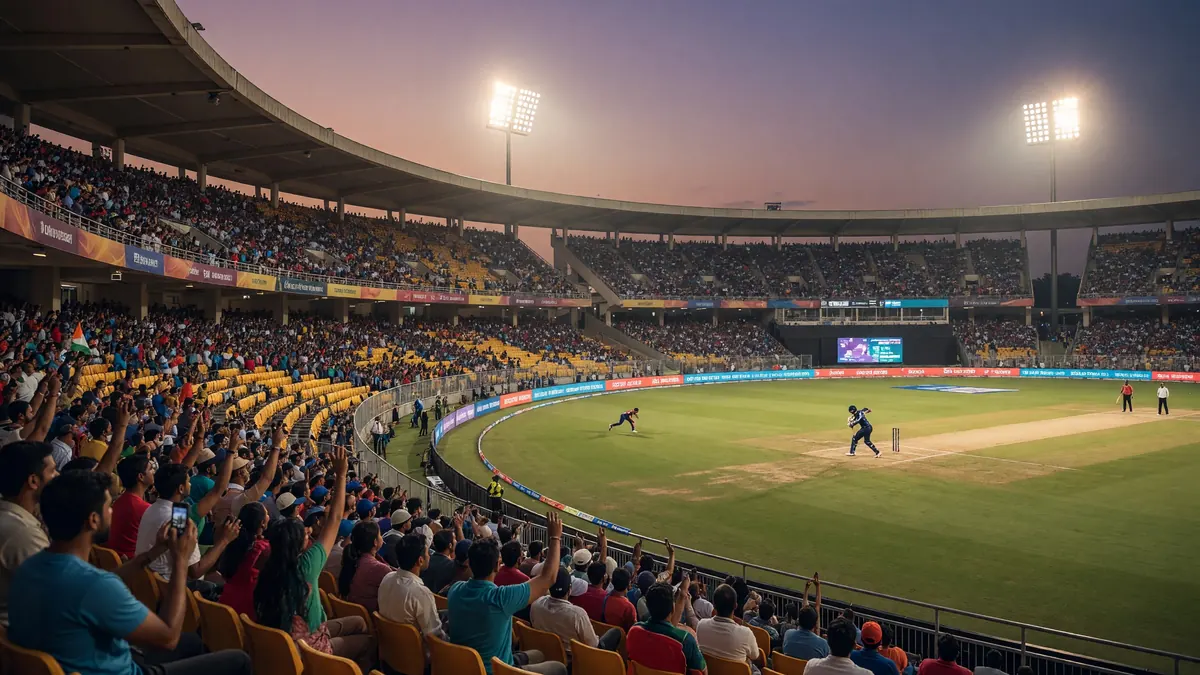
At the IPL 2026 auction, India leg-spinner Rahul Chahar was sold to Chennai Super Kings for Rs 5.20 crore. The hammer price sat well above his Rs 1.00 crore base and closed only after a long exchange with Punjab Kings, who pushed the bidding to Rs 5.00 crore before CSK sealed the lot. Cricbuzz’s auction tracker lists the status as sold, the buying franchise as CSK, and the full trail at 27 bids — a dense enough contest to show that more than one board still saw him as middle-overs insurance rather than a depth pick.
This is a dated retrospective of that sale, written from the auction record rather than from live press-conference spin. The numbers below stay inside the verified trail: base and final price, the CSK–PBKS duel, the short profile notes on how Chahar bowls, and the multi-year IPL earnings table that put the Rs 5.20 crore figure in career context. For managers rebuilding spin depth on Halaplay after the auction, the clean question is not whether the price felt “high” in the room. It is what role the price bought, and where that role sits inside a CSK bowling plan already rich in experience.
What The Auction Board Actually Recorded
Chahar entered the IPL 2026 auction listed as an India bowler and leg spinner, with a base price of Rs 1.00 crore. The final price settled at Rs 5.20 crore. That is a five-fold jump from the opening mark and a clear signal that the room treated him as a specialist with a defined overs window rather than as a generic Indian spin fill-in. The buying team on the tracker is CSK. The previous bidder on the trail is PBKS at Rs 5.00 crore, which means the last meaningful counter came from a franchise that had already paid him Rs 5.25 crore across the 2022–2024 window.
Twenty-seven bids is not a ceremonial raise. It is the kind of extended back-and-forth that usually appears when two franchises share a similar roster gap — here, a middle-overs leg-spin option who can hold a length, attack the stumps, and still carry a googly that batters have to respect. The trail itself alternated between CSK and PBKS through most of the climb: early bids sat near the base, then the price stepped through the Rs 2 crore and Rs 3 crore bands before the final stretch from Rs 4.80 crore (CSK) to Rs 5.00 crore (PBKS) to Rs 5.20 crore (CSK sold). Once the hammer fell, the tracker’s status line simply read sold.
For readers tracking the wider auction through IPL 2026 coverage, the Chahar lot is useful because it is specific. Base price, final price, buyer, runner-up, bid count, and career earnings are all on the same record. That makes the sale easier to audit than a vague “strong interest” headline and easier to translate into fantasy salary math once official credit sheets settle.
How The Bid Trail Climbed From Base To Hammer
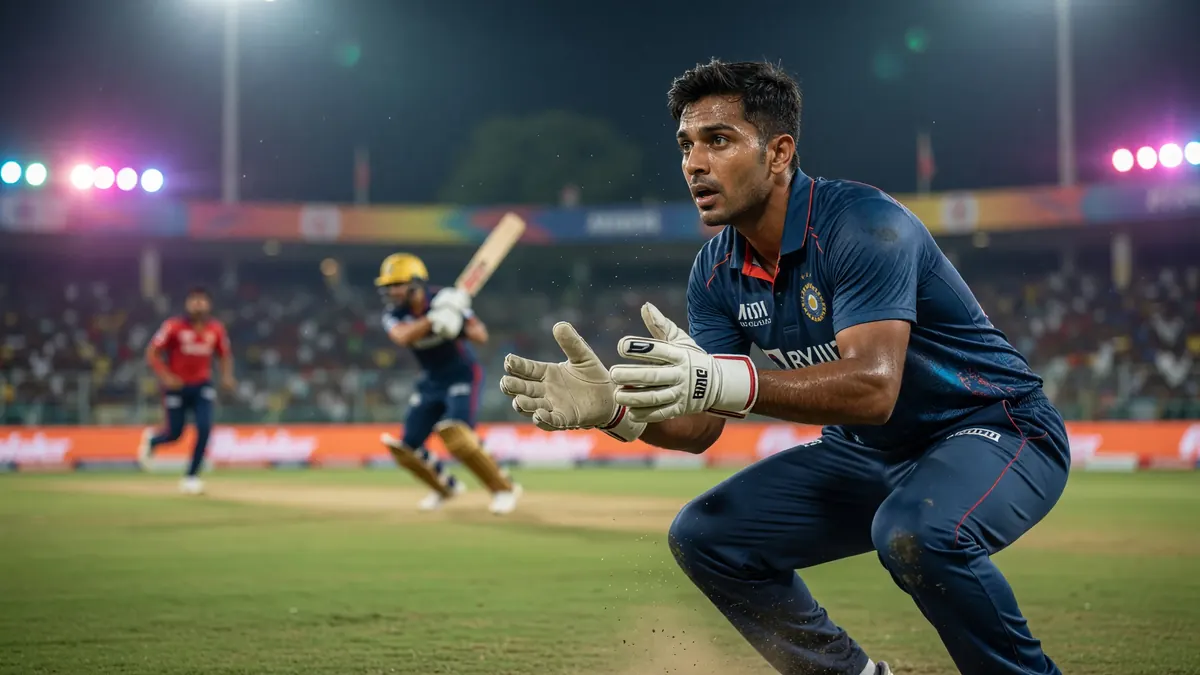
The published trail begins with CSK opening at the Rs 1.00 crore base. PBKS answered at Rs 1.10 crore, and the two sides then traded increments through the low- and mid-rupee bands. CSK held several of the intermediate steps — Rs 1.20, 1.40, 1.60, 1.80, 2.00, 2.40, 2.80, 3.20, 3.60, 4.00, 4.40, 4.80 crore — while PBKS filled the opposing rungs at Rs 1.10, 1.30, 1.50, 1.70, 1.90, 2.20, 2.60, 3.00, 3.40, 3.80, 4.20, 4.60 and, finally, 5.00 crore. The last CSK bid of Rs 5.20 crore closed the lot.
Two structural points stand out from that sequence. First, neither franchise blinked early. A 27-bid duel that starts at base and ends above Rs 5 crore usually means both boards had already decided the player fit a named gap, not a speculative depth slot. Second, PBKS’s willingness to go to Rs 5.00 crore is not abstract nostalgia. Punjab had paid Chahar Rs 5.25 crore for each of the 2022, 2023 and 2024 seasons. Returning to a near-identical band in 2026 suggests the franchise still valued the same middle-overs profile, even if CSK ultimately outbid them by Rs 20 lakh.
Auction rooms compress years of scouting into a few minutes of paddle work. The trail does not show which CSK coach argued for the googly, or which PBKS analyst flagged overs 7–15. It does show the price the market cleared at when two franchises with recent knowledge of the player refused to leave the room first. That cleared price — Rs 5.20 crore — is the number fantasy managers should anchor on when comparing Chahar’s auction tag with other Indian spin options bought in the same cycle.
The Bowling Profile Behind The Price
Cricbuzz’s player notes on the auction page describe Chahar as a street-smart leg spinner who bowls at a quicker pace, attacks the stumps, and carries a well-disguised googly and slider. Those four traits map cleanly onto a T20 middle-overs brief. Quicker pace reduces the window for batters to step out and loft with the spin. Stump-to-stump lines force batters to manufacture angles rather than wait for width. A googly that is hard to pick turns single-side field settings into two-sided problems. A slider gives the bowler a flatter, lower option when the surface is slow and the batter is sitting deep.
None of that language is match-report colour. It is the scouting shorthand franchises use when they decide whether a leg spinner is a holding option, a wicket-taking option, or both. Chahar’s notes point to both: the quicker pace and stump line support economy, while the googly and slider support breakthrough overs when a set batter is looking to accelerate. That dual path is exactly why Indian leg spinners with international exposure still clear multi-crore marks even in a market crowded with wrist-spin alternatives.
For CSK specifically, the profile matters because the franchise’s historical middle-overs shape has often mixed finger spin, wrist spin, and pace-off. Adding a leg spinner who already attacks the stumps gives the bowling group a different release point and a different wrong’un shape from a conventional off-spinner or left-arm orthodox option. Fantasy managers should not invent a guaranteed XI place from the auction price alone, but they should treat the price as evidence that CSK paid for a specialist role rather than for squad decoration.
Career Earnings That Framed The Rs 5.20 Crore Mark
The same auction page carries Chahar’s IPL earnings history, and the line is long enough to make the 2026 price legible. In 2017 he was bought by Rising Pune Supergiant for Rs 10.00 lakh. From 2018 through 2021 he sat at Rs 1.90 crore with Mumbai Indians. Punjab Kings then paid Rs 5.25 crore for each of 2022, 2023 and 2024. Sunrisers Hyderabad signed him for Rs 3.20 crore in 2025. The 2026 CSK sale at Rs 5.20 crore sits 63 percent above that SRH mark and just under the three-year PBKS peak.
Total IPL earnings shown on the tracker are Rs 31.85 crore, based on officially available data, with the usual caveat that exact figures can vary if undisclosed clauses sit outside the public table. Even with that caveat, the arc is clear: a low entry in 2017, a stable MI band through the late 2010s, a sharp re-rating at PBKS, a softer SRH year, and a return toward the Rs 5 crore neighbourhood when CSK and PBKS fought the 2026 lot. The market has now twice cleared above Rs 5 crore for the same bowler — once as a multi-year PBKS deal band, once as a single auction hammer.
That history also explains why PBKS stayed in the bidding to Rs 5.00 crore. Franchises rarely chase a former player to a previous high without believing the role still exists. CSK’s willingness to go one step further says the same thing from the other side of the ledger: the yellow jersey board valued the same overs window enough to outbid the franchise that had already paid the premium. For Halaplay users, the practical takeaway is that Chahar’s auction tag is not an outlier spike on a cold name. It is a re-entry into a band the market had already accepted between 2022 and 2024.
What The Sale Means For Fantasy Construction
Auction prices do not equal fantasy credits, but they do shape ownership psychology and role expectations. A Rs 5.20 crore Indian leg spinner bought after 27 bids will enter most pre-season shortlists as a middle-overs candidate rather than as a pure bench name. On Halaplay, that usually translates into three construction questions. First, does CSK’s confirmed XI give him a four-over window, or does he share spin overs with established options? Second, which venues in the CSK home-and-away slate reward wrist spin through overs 7–15? Third, is his upside wicket-led, economy-led, or both on the nights he plays?
The profile notes favour a mixed answer. Quicker pace and stump lines support economy floors; the googly and slider support wicket spikes when batters misread the wrong’un. Fantasy managers who only chase wicket hauls will underrate the quiet 3-for-24 nights that come from holding a middle-order pair. Managers who only chase economy will underrate the overs where CSK throws him the ball specifically to break a partnership. The better read is to treat him as a conditional spin pick: higher priority on slower surfaces and against right-hand-heavy middle orders, lower priority on true bounce decks where seamers already own the middle overs.
Salary-cap math will settle once official credit sheets land, but the auction tag already hints at the ownership band. Multi-crore Indian specialists often land in the mid-credit range where managers must choose between a second spinner and a third seamer. Chahar’s value in that trade will depend less on the Rs 5.20 crore headline and more on whether CSK’s early-season XI shows him the ball in powerplay-adjacent or deep middle-overs windows. Until those XI patterns appear, the disciplined approach is to shortlist him as a role-based spin option rather than auto-lock him as a franchise premium.
Why PBKS Pushed And Why CSK Paid
Punjab Kings’ presence on the trail is the cleanest secondary fact in the sale. A franchise that paid Rs 5.25 crore for three straight seasons does not re-enter a lot at Rs 5.00 crore by accident. The board already knew the player’s training habits, injury history, and preferred fields. Returning to that price band in 2026 means PBKS still saw a gap that matched Chahar’s quicker leg-spin shape. Losing the lot by Rs 20 lakh does not erase that read; it only means CSK’s ceiling on the night was higher.
CSK’s side of the ledger is simpler. The franchise bought a proven IPL leg spinner with international caps, a multi-franchise track record, and a skill set that does not duplicate a standard finger-spin option. At Rs 5.20 crore, the cost is material inside a capped purse, which is why the bid count matters: CSK did not stumble into the price. The board climbed through twenty-seven steps with a clear alternative bidder in the room. That is the behaviour of a franchise filling a named role, not of a franchise padding a spin department for optics.
For the rest of the league, the sale also sets a quiet reference point. If an India-capped leg spinner with Chahar’s career band clears Rs 5.20 crore after a full duel, other wrist-spin lots in the same auction cycle can be priced against that mark. Fantasy managers comparing spinner tiers should keep the same reference: Chahar is not a mystery overseas wildcard and not a pure uncapped gamble. He is a known domestic quantity whose market price has now re-centred near the Rs 5 crore line after a softer 2025 at SRH.
Present-Day Relevance After The Hammer
Retrospectives are only useful if they leave managers with a usable frame. The usable frame from Chahar’s IPL 2026 sale is narrow and concrete. CSK paid Rs 5.20 crore. PBKS stopped at Rs 5.00 crore. The base was Rs 1.00 crore. The trail ran 27 bids. The bowling notes stress quicker pace, stump lines, googly and slider. The career earnings table shows a climb from Rs 10 lakh in 2017 to a multi-year Rs 5.25 crore band at PBKS, a Rs 3.20 crore SRH year, and a return to Rs 5.20 crore at CSK, with total listed earnings of Rs 31.85 crore.
That package still matters after the auction lights go down because squad sheets and fantasy shortlists are built from exactly these facts. When CSK’s first XI notes appear, managers can check whether the Rs 5.20 crore investment turned into regular middle-overs responsibility. When PBKS names its spin group, managers can check which alternative filled the gap the franchise nearly spent Rs 5 crore to close. When credit values land on Halaplay, managers can compare Chahar’s price band with other Indian spinners bought in the same room and decide whether the auction premium is already baked into ownership.
The legacy of the lot is therefore not a slogan about “auction drama.” It is a priced role: a CSK leg spinner bought against a former franchise at a figure the market had already accepted earlier in the decade. Keep the bid trail, the skill notes, and the earnings arc together, and the sale remains a clean reference whenever middle-overs spin returns to the selection table through the IPL 2026 season.
Frequently Asked Questions
How much did Chennai Super Kings pay for Rahul Chahar?
CSK bought Rahul Chahar for Rs 5.20 crore at the IPL 2026 auction. His base price was Rs 1.00 crore, and the lot closed after 27 bids.
Which franchise finished as the underbidder?
Punjab Kings made the last opposing bid at Rs 5.00 crore before CSK’s winning bid of Rs 5.20 crore. The published trail shows CSK and PBKS trading raises through most of the climb.
What does the auction profile say about Chahar’s bowling?
The Cricbuzz auction notes describe him as a street-smart leg spinner who bowls at a quicker pace, attacks the stumps, and uses a well-disguised googly and slider.
How does the 2026 price compare with his recent IPL deals?
PBKS paid him Rs 5.25 crore in each of 2022, 2023 and 2024. SRH signed him for Rs 3.20 crore in 2025. The 2026 CSK sale at Rs 5.20 crore sits just under the PBKS peak and well above the SRH mark.
What are his total listed IPL earnings?
The auction tracker lists total IPL earnings of Rs 31.85 crore based on officially available data, covering the path from Rising Pune Supergiant in 2017 through Mumbai Indians, Punjab Kings, Sunrisers Hyderabad and Chennai Super Kings.