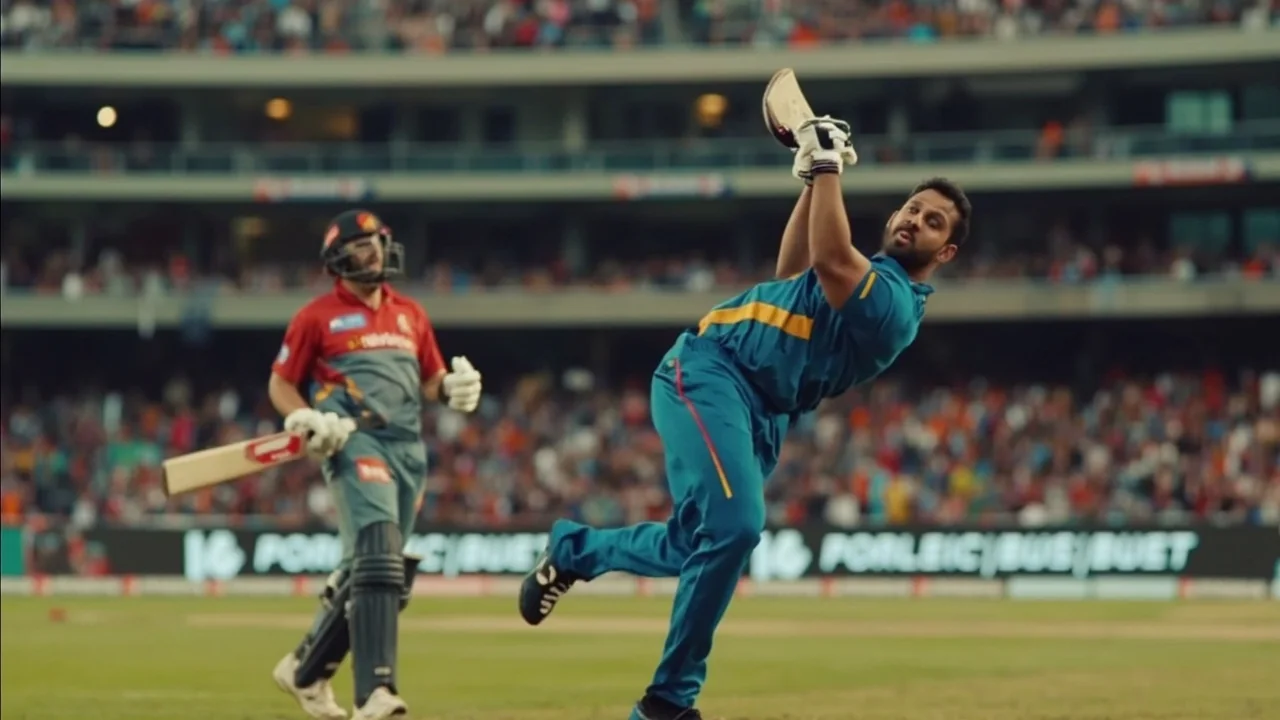
On 25 July 2026, Hindustan Times published an opinion column by Amrit Mathur, a former India team manager, arguing that The Hundred is a poor cousin of the Indian Premier League. The piece was built on first-hand observation: Mathur attended Hundred matches at Lord's and the Oval during the live 2026 season and came away with the view that the league is an energetic but unmistakably scaled-down version of the IPL. The same review notes the elaborate venue branding and in-stadium atmosphere typical of IPL grounds were absent in London, with the strongest commercial pulls at the concession stands rather than the boundary rope.
The comparison runs on a number of axes: the playing format itself, the franchise architecture, the visual identity on the field, the commercial depth of the league, and the way the crowd behaves inside the ground. Each axis tells a different story about what the IPL is, what The Hundred is, and where the deliberate differences sit.
Where The Formats Actually Diverge
The most consequential difference is also the most obvious one. The Hundred uses 100 balls per innings rather than the T20 standard of 120, with bowlers delivering in sets of five or ten balls instead of full six-ball overs. The change shrinks matches in a way the IPL never tried. A six-ball over is the unit most broadcast graphics, most commentary scripts, and most fantasy cricket scoring interfaces — including the one powering Halaplay — are built around; replacing it with a five-ball or ten-ball block changes how a captain reads a chase, how a death bowler paces his variations, and how a fantasy manager weights wicket value against run value.
The Hundred's match window is also built around a different rhythm. The schedule places games on weekdays with a 6:30 pm start and a three-hour total runtime, deliberately tuned to the post-work commuter window. The IPL's evening double-headers stretch longer, often beginning after 7:30 pm IST and running past 11, with the league designed for both stadium attendance and a primetime broadcast slot. The Hundred's tighter window is a practical concession to the English working week; it is also the structural reason the format can run in sets of five rather than six without losing its tempo.
Players and coaches who have moved between the two formats describe the adjustment as larger than the twenty balls of difference on paper. Captains in The Hundred report the absence of a defined six-ball over as forcing more conservative powerplay calls — there is no natural three-over checkpoint to attack, and the conventional reading of the chase phase that fantasy cricket is built on has to be relearned. For the league's purpose, that adjustment is the point. The Hundred is positioned as an upgrade of England's domestic Vitality Blast, distinguished from the older competition mainly by the presence of overseas players.
How Closely The Franchise Mirror Matches The IPL
The structural borrowing is more visible than the format borrowing. The franchise owners behind The Hundred are mostly Indian-owned, and the team names are direct carryovers from the IPL stable — MI Oval, Sunrisers Leeds, Manchester Super Giants — with jerseys that closely mirror their IPL counterparts. The figure 8 detail that runs through Manchester Super Giants' wordmark, the navy-blue sash of the Oval franchise, and the colour bands across the Leeds kit are not accidents. Each franchise is using the visual equity of its Indian sister brand as a launchpad.
That decision has clear commercial logic. The Hundred was launched into a market in which the IPL had spent fifteen years building recognisable brand equity, and naming a Leeds franchise Manchester Super Giants rather than something indigenous saves the marketing budget the cost of educating an English fanbase from scratch. The cost is a loss of identity — for English county cricket supporters who already have loyalties stretching back decades, the imported look registers as derivative rather than local.
For fantasy cricket players used to Halaplay's IPL 2026 interface, the most visible consequence of the franchise architecture is the player-pool overlap. Overseas stars appear in both competitions in the same calendar year, and the comparative reading on form is becoming standard practice. A bowler who closes out death in The Hundred at the Oval is, three weeks later, often an IPL 2026 captain pick on Halaplay. The same franchise ownership reduces friction for both the player and the audience: the brand recognition flows both ways.
What Was Actually Missing At Lord's And The Oval
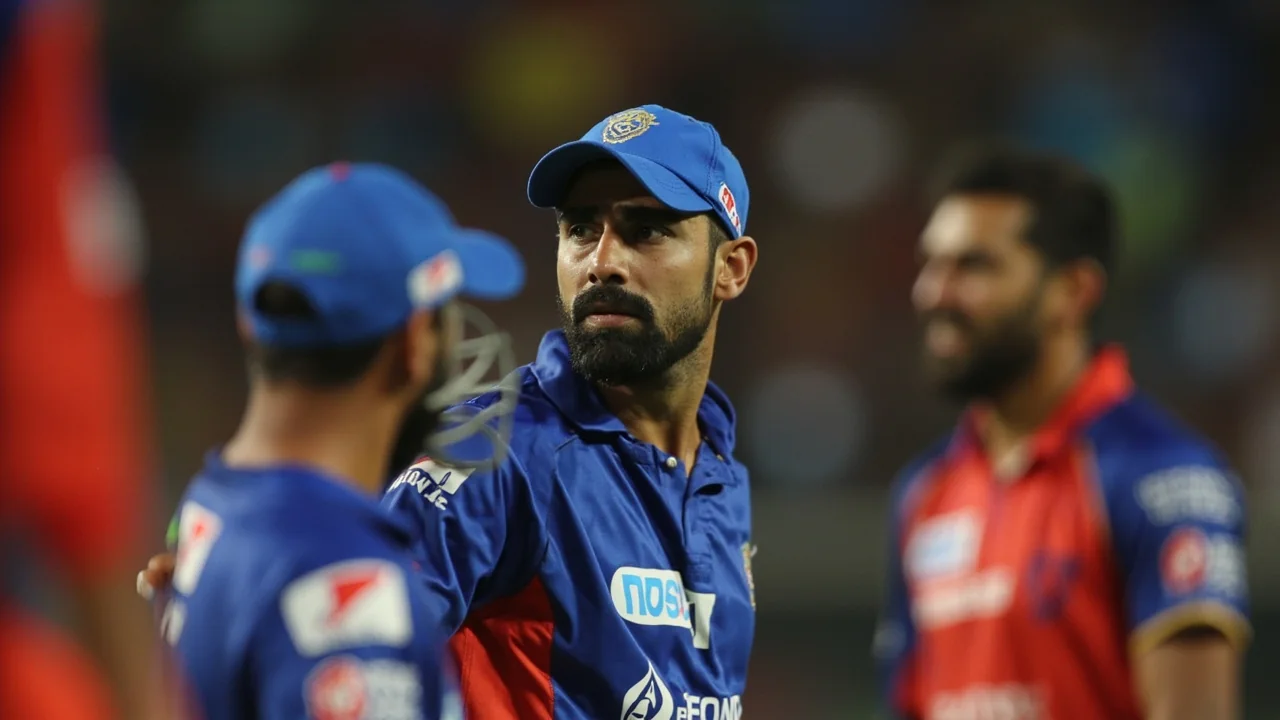
Mathur's column spends its sharpest lines on what was absent rather than what was present. At Lord's and the Oval, the elaborate venue branding and in-stadium energy typical of IPL grounds were not there. The seating bowl was partly empty in the upper tiers for many matches; the music cues between balls were quieter than their IPL equivalents; the visual identity of the boundary rope — the IPL's distinctive stitched ribbons — did not have a Hundred counterpart.
What was loud, by the columnist's account, was the concession trade. Spectators were drawn to Peroni pints sold at £8 and English sausage rolls at £12. The match-day experience had been weighted toward the food-and-drink economy rather than the cricket-as-spectacle economy, and the resulting atmosphere was closer to a county match with louder music than to the carnival environment that Wankhede Stadium or Eden Gardens produces on a Saturday night. The difference is not about the quality of the cricket. It is about the way the league is staged around the cricket.
For Halaplay users who build fantasy cricket teams around home advantage and crowd-pressure adjustments — a well-known differential category on the platform — the contrast is worth keeping in mind. Teams that rely on a charged home crowd to lift performance above baseline will not get the same boost from a Hundred match at the Oval that they would from an IPL 2026 match at Wankhede. The bowler-friendly scenario looks the same; the human-in-the-stadium scenario does not.
Where The Commercial Inertia Shows Up
The Hundred teams have struggled to attract sponsors, and commercial interest around the league has run low compared with the corporate engagement the IPL commands. Title rights, shirt sponsorships, and stadium-naming deals that an IPL franchise can sign in a single auction cycle take multiple sales cycles to close in The Hundred, and the headline sponsorship values are a fraction of the comparable IPL figure.
That gap tells you something about the underlying business. The Hundred plays in a window that overlaps with the launch phase of the English football Premier League, which dominates UK sports sponsorship budgets from August through May. Cricket sponsorship in England has historically been cyclical, anchored on the Ashes summer and the occasional World Cup campaign; The Hundred sits in the unfunded gap between those peaks. For comparison, the IPL plays almost year-round in terms of commercial attention — the auction, the season, the off-season retentions, the trade window — and the corporate audience has learned to make room on the calendar.
The flip side is also worth noting. The Hundred's lower commercial intensity means a smaller mid-tier sponsorship base, which in turn means lower franchise valuations and a tighter salary bracket for overseas players than the IPL offers. Indian players do not appear at the Oval and Leeds, but Australian, South African, West Indian, Sri Lankan and English white-ball stars do — and the price they can command is constrained by what the underlying league can pay. The Hundred is therefore a useful preparation league and a useful proof-of-form league, but not a financial destination. For Halaplay fantasy players tracking form cycles, that constraint is actually helpful: a player who excels in The Hundred is reading well against a tighter competitive field, not just against weak opposition.
How The Crowds Read The Cricket
The cultural difference is the one Mathur's column leans into most heavily. Cricket crowds in England traditionally applaud good shots with polite clapping rather than the jumping, screaming, and player chants — Dhoni-Kohli-style — heard at IPL matches in India. The Hundred crowds at Lord's and the Oval continued that tradition. There is no measurable attempt to reproduce the IPL crowd dynamic, and the column reads the absence as a definitive gap.
The comparison is fair at the experiential level, though it overstates the symmetry on offer. A more accurate framing would distinguish between authentic local cricket culture (which the English grounds have in abundance) and the manufactured stadium theatre that the IPL built specifically as a competitive differentiator when the league launched in 2008. The Hundred's attempt to import the franchise structure was never matched by an attempt to import the stadium theatre; the English cricket audience is not the same audience, and pretending otherwise would have been a more expensive mistake than leaving the gap alone.
For fantasy cricket players, the takeaway is that crowd roar does not translate into the scoring dynamics they credit it for. The Hundred's lower-energy environment does not change expected wicket rate, expected dot-ball percentage, or expected scoring rate. What it does change is the home-bowling advantage — large at Wankhede, smaller at the Oval — and that is a small data point on a player pool of eight teams rather than ten. The bigger difference between the leagues is structural, not atmospheric.
What The Comparison Means For Fantasy Players
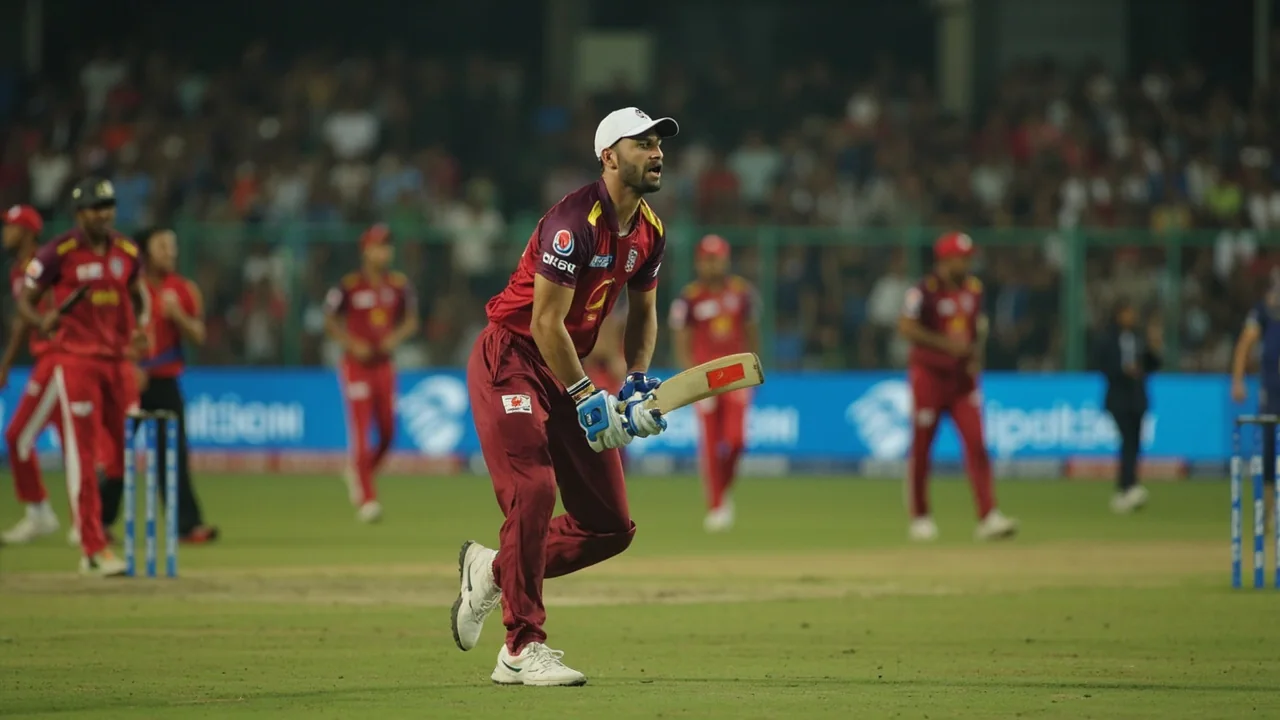
For Halaplay fantasy cricket managers tracking the IPL 2026 cycle, The Hundred has become a useful scouting window — not because the formats are interchangeable, but because the player pool overlaps in ways that make form reading easier. A bowler who closes out his set of five at the Oval under pressure is, two weeks later, often back in an IPL 2026 death-over role where his Halaplay ownership sits at a similar percentage band. The cross-format form read is one of the more reliable signals available, and The Hundred's compressed calendar makes it a high-density source.
What fantasy players should not assume is that the formats reward the same player types identically. The Hundred's 100-ball structure compresses the powerplay, slightly reduces the value of six-ball specialists who rely on over-pattern reads, and gives captains more freedom to keep bowlers on for shorter bursts. On Halaplay, this shows up as a small but consistent shift in expected points for bowlers who can bowl multiple short bursts effectively — the Australian and South African quicks who appear in both leagues are the clearest beneficiaries. Batters who can clear the ropes in 5-10 ball windows gain a small edge in The Hundred and lose a small one in the IPL's six-ball rhythm.
The cleaner pattern is the venue reading. The Hundred's grounds — Lord's, the Oval, Edgbaston, Headingley, Old Trafford, Trent Bridge, the Ageas Bowl, Sophia Gardens — produce death-overs numbers that are more conservative than the average IPL 2026 venue at the same stage of the chase. For fantasy managers who have built HALAPLAY100-driven bankroll discipline around death-overs specialists, that adjustment matters. The Hundred is not the IPL; it is a cousin, and a useful one for the form read, but the credit math on Halaplay does not transfer one-to-one between the two leagues. IPL 2026 remains the higher-variance league, and that is exactly where a 5 Crore mega contest prize pool rewards the captain picks who can read the format correctly.
What Comes Next For Both Leagues
Two concrete markers will tell readers how the comparison holds up over the rest of 2026. The first is the Hundred's August fixture calendar — whether the post-Ashes Hundred matches at Lord's, Headingley, and Old Trafford pull the kind of crowd and broadcast numbers that justify the league's pre-season commercial projections. The second is the close of the IPL 2026 trade window's downstream effect on the second-half IPL squads and the IPL 2026 auction's reserve pricing for the next cycle. Both will feed back into how Halaplay users calibrate their fantasy cricket picks over the rest of the season.
The longer read on The Hundred, in the columnist's framing and beyond, is that it has now had five seasons to prove itself as the IPL's English counterpart. The franchise architecture and the visual identity have been borrowed convincingly; the match-day theatre and the commercial depth have not. The Hundred survives as a legitimate top-tier white-ball league, and it draws a real audience, but the gap to the IPL on those two axes remains large enough that the comparison is settled, at least for the next two broadcast cycles. For IPL 2026 fantasy players, that conclusion is the relevant one: the IPL remains the league to build teams around, and the Hundred is best used as a reading lens on what is coming.
Frequently Asked Questions
How is The Hundred different from the IPL on the field?
The Hundred uses 100 balls per innings instead of the T20 standard of 120, with bowlers delivering in sets of five or ten balls rather than six-ball overs. Matches are scheduled on weekdays with a 6:30 pm start and a three-hour runtime, designed to fit the post-work commuter window. The IPL uses six-ball overs and matches that run later, with double-headers stretching past 11 pm IST.
Do The Hundred teams share owners with IPL franchises?
The franchise owners behind The Hundred are mostly Indian-owned, and team names are direct carryovers from the IPL stable — MI Oval, Sunrisers Leeds, Manchester Super Giants — with jerseys that closely mirror their IPL counterparts. The same ownership reduces friction for overseas players who appear in both competitions in the same calendar year.
What did the Hindustan Times column actually argue?
On 25 July 2026, Hindustan Times published an opinion column by former India manager Amrit Mathur arguing that The Hundred is a scaled-down, energetic weak imitation of the IPL, based on first-hand observation of matches at Lord's and the Oval. The piece noted that the elaborate venue branding and in-stadium energy typical of IPL grounds were absent, with the strongest commercial pulls at the concession stands rather than the boundary rope.
Can The Hundred match the IPL's commercial depth?
The Hundred teams have struggled to attract sponsors, and commercial interest around the league has run low compared with the corporate engagement the IPL commands. Title rights, shirt sponsorships, and stadium-naming deals that an IPL franchise can close in a single auction cycle take multiple sales cycles to close in The Hundred, and the headline sponsorship values sit well below comparable IPL figures.
Is The Hundred useful as a form read for IPL 2026 fantasy?
Yes, with calibration. Overseas stars appear in both leagues in the same calendar year, and the comparative reading on form is becoming standard practice. The structural format differences — five-ball or ten-ball sets versus six-ball overs — mean the credit math on Halaplay does not transfer one-to-one. The Hundred is best treated as a scouting window rather than a substitute league.
For more cricket news from the Halaplay editorial desk, including player features, tournament coverage, and fantasy-relevant transfer updates, the news archive is updated regularly.