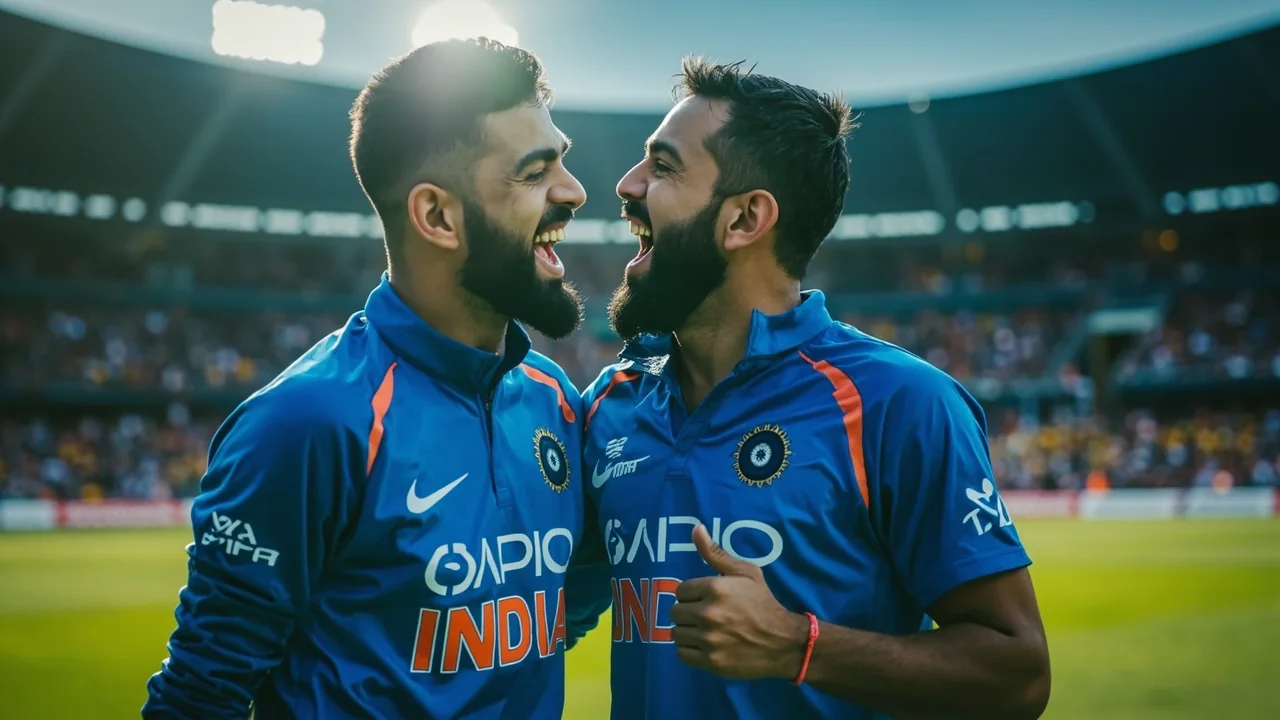
Six T20I defeats in a row, the first whitewash of that length in India's T20I history, and a Southampton night where the post-mortems began before the players had reached the dressing room. The temptation, looking back from 14 July 2026, is to fold the ODI squad into the same column. The squad that travels to Birmingham for the first ODI on Tuesday refuses that read. Different format, different captain, different batting order, and three of the most experienced white-ball cricketers in the world walking back through the dressing-room door.
Shubman Gill leads an ODI side that includes Rohit Sharma, Virat Kohli and Jasprit Bumrah. A spine that has won World Cup knockout games and conquered English conditions before. Shreyas Iyer, who captained the T20I leg, sits as vice-captain in the fifty-over format. KL Rahul returns as the wicketkeeping option, and Kuldeep Yadav is back as a wrist-spinner who has historically troubled England's middle order in fifty-over cricket. Reading the T20I collapse as a verdict on this group would be a significant misreading of the brief.
Why The T20I Run Does Not Transfer
The T20I squad in England was an experiment. Vaibhav Sooryavanshi and Suryansh Shedge were exposed to conditions neither had faced before. Bumrah was not in the squad at all, the captain was in his second series in charge, and the batting order was built around giving youth a runway rather than around winning the next match. That brief has a logic in T20I cricket, where franchise windows are short and depth charts need live data, but it has nothing to do with how a fifty-over side prepares for a 2027 World Cup.
Fifty-over cricket in England rewards precisely what the T20I side could not provide. Batters have time to absorb the new ball, see off the Jofra Archer and Josh Tongue short-ball spells, and build rather than swing from ball one. Rohit and Kohli have made their careers on the ability to weather early pressure before accelerating, a tempo that is a liability in T20 cricket and a foundation in ODIs. The frenzied risk-taking that unravelled the T20I top order is simply not required in a format that still rewards the patient fifty.
There is also the matter of who is missing rather than who is back. India's T20I attack in Southampton conceded 257 with no genuine spearhead at the top of the mark. The return of the world's best fast bowler transforms both the powerplay and the death overs that England exploited without resistance. Add Kuldeep Yadav's left-arm wrist-spin, KL Rahul's wicketkeeping stability and the all-format experience of Rohit at the top, and the gap between the two squads is closer to a generational shift than a tweak.
The Bumrah Factor In English Conditions
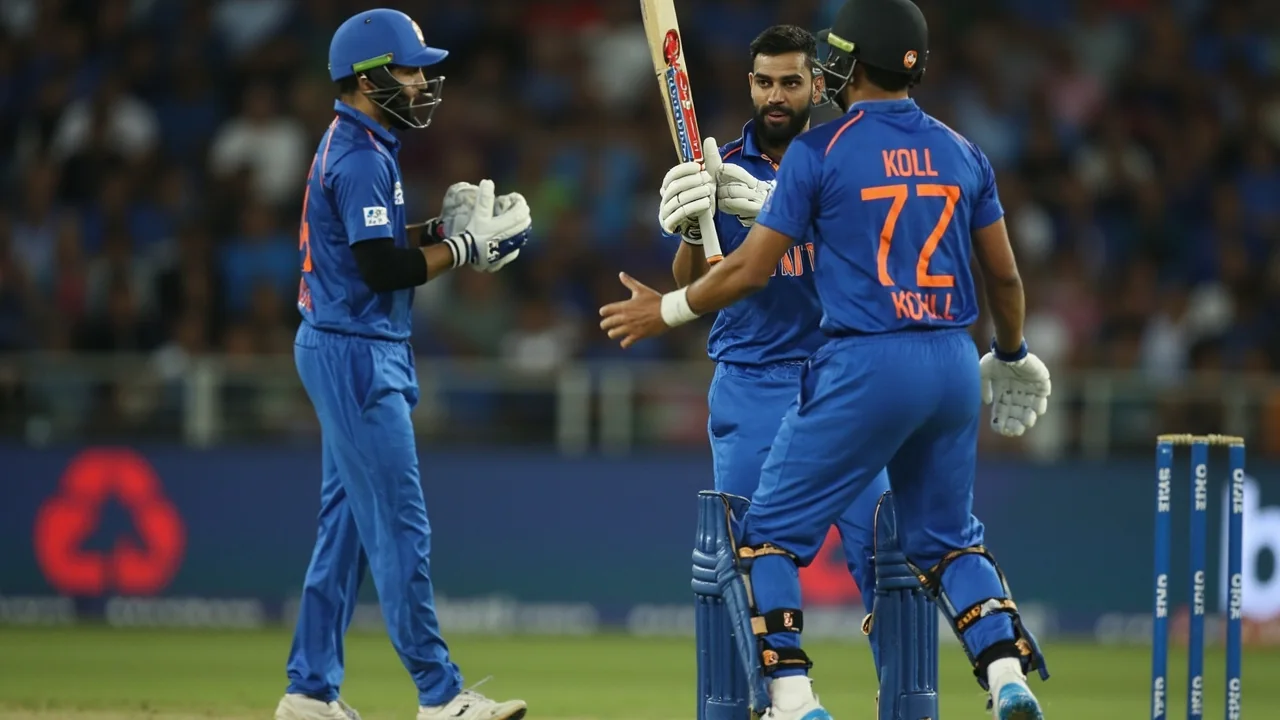
Jasprit Bumrah's value to this India side has rarely been clearer than it is heading into the Edgbaston ODI. His absence from the T20I leg stripped India's bowling of its only world-class wicket-taking option in the powerplay and death, and the attack that replaced him looked ordinary against a confident England batting order. The numbers from Southampton, 257 conceded, no top-order wickets in the powerplay. Those numbers are exactly the kind of performance that becomes impossible when Bumrah is in the XI.
What Bumrah gives Gill in the ODI format is the rare combination of new-ball control and death-overs acceleration. He can bowl four overs at the start without conceding boundaries and still come back at the end to bowl yorkers at 145 kph. No other bowler in India's white-ball squad offers that profile, and his presence alone changes how England will approach the chase. England's batters cannot play the T20I template of going after the part-time options in the last ten overs when Bumrah is in the attack.
For fantasy managers on Halaplay, Bumrah's return is also the cleanest captain candidate on the bowling side. ODI fantasy scoring rewards wickets at any stage of the innings but multiplies the points when they come at the death, and Bumrah's average wicket haul in England across formats has consistently been skewed towards the back end of the innings. If India's early breakthroughs come from the new ball, Bumrah's points tally will be the kind of figure that separates grand-league leaderboards from mid-tier finishes.
Rohit And Kohli: Why This Format Still Suits Them
There is a lazy narrative doing the rounds that Rohit Sharma and Virat Kohli are finished in ODI cricket. The Southampton T20I did not feature either man, and yet it has been used to question whether they still belong in the white-ball scheme. The numbers say otherwise. Both men remain India's highest-impact ODI batters against pace and bounce, and both have a documented record in English conditions that no other Indian batter can match.
Rohit's record at English grounds has always been a story of calculated assault once the new ball is past its hardest phase. He averages comfortably above 50 in England across formats and has a particular fondness for the short-ball pull that has historically troubled the Archer–Tongue–Wood combination. Kohli, by contrast, is at his best when he can bat through the middle overs, rotate the strike against spin, and accelerate against the part-time options in the back ten. The ODI format rewards exactly those skills.
The concern around Kohli remains his fitness. His participation in the ODI series was conditional on a clearance at the time the squad was announced, and India will be monitoring his progress at training before each of the three matches. For fantasy managers, that is the single most important squad-update to track in the days leading up to the toss. A Kohli who plays is a top-three fantasy captain candidate on any pitch; a Kohli who doesn't play reshuffles India's batting order and changes the captain vote entirely.
The Late Replacements: Prince Yadav And Ravi Bishnoi
India's squad lost two bowlers to injury between the T20I leg and the ODI announcement. Harshit Rana's side strain ruled him out of the red-ball plans, and Varun Chakravarthy's finger injury opened a wrist-spin slot that India filled from within the squad rather than reaching outside. Prince Yadav, the Uttar Pradesh seamer, and Ravi Bishnoi, the leg-spinner who broke through for India in T20 cricket before losing his place, are the late additions.
Prince Yadav's inclusion is a low-risk, high-ceaseiling punt. He has been on India's white-ball radar since the 2025–26 domestic season, where his bounce and skid from a six-foot-ten frame troubled batters on Indian tracks. English conditions, with their lateral movement and overhead bounce, are an unfamiliar test, but the kind of challenge that often produces a fast-tracked debut. If India need a sixth bowling option in the first ODI, Prince Yadav's ceiling is high enough that a debut cannot be ruled out.
Ravi Bishnoi's recall is the more interesting tactical story. He lost his place to Varun Chakravarthy in the T20I format and has spent the last six months working on his white-ball death overs in the Indian Premier League. With Chakravarthy injured and Kuldeep Yadav expected to lead the spin attack, Bishnoi becomes the second specialist spinner in the squad and the most likely candidate to bowl the middle overs against England's left-handers. His selection is also a quiet signal that India rate the wrist-spin match-up against England more highly than a finger-spin option would have suggested.
Gill's First ODI Series As Captain And What It Tells Us
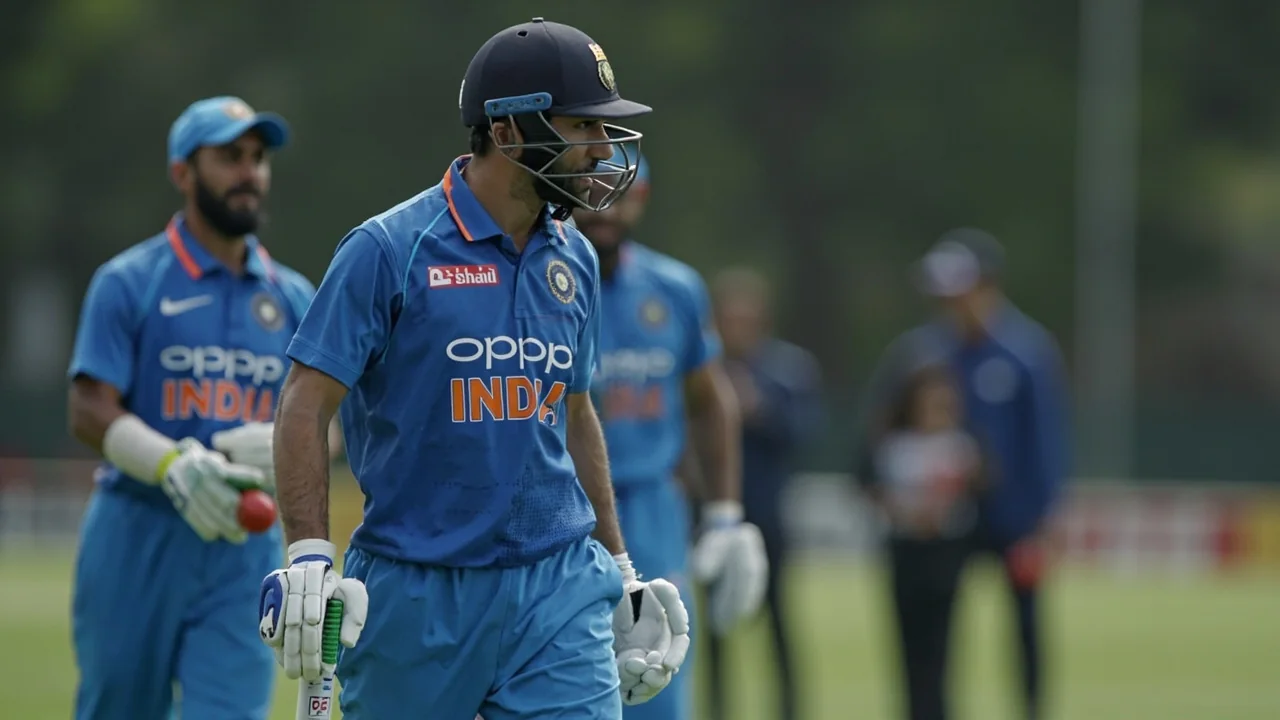
Shubman Gill's appointment as ODI captain was confirmed in late 2025, and the Afghanistan home series earlier in 2026 was the first stress test of the new leadership group. India won that series 3-0 with comprehensive margins, and the batting template, with Gill at three or four, Iyer at five, Rahul at six, and the seam-bowling all-rounders providing the late-innings acceleration, worked cleanly enough that India have not felt the need to deviate for England.
What the Afghanistan series did not test was the away condition. India's three ODI wins came on home tracks, where the ball comes onto the bat and the spin options dominate. England presents the opposite challenge: lateral movement with the new ball, a slower outfield, and the constant cloud cover that has historically helped the seamers. Gill's captaincy will be judged in the next three weeks on how he handles those conditions, how he rotates his bowlers, and whether he can make the kind of mid-innings tactical switches that win close ODIs.
For fantasy managers, Gill's batting position is the most useful data point. If he slots in at three, his ceiling is a hundred and his floor is a fifty, which makes him a captain candidate in any conditions. If he bats at four or five, his role becomes more situational, and his fantasy value depends heavily on the top-order wickets falling in the right order. The first ODI toss will reveal a lot about how India and Gill see the chase, and that information is more valuable than any pre-series prediction.
What England Brings To The Series
England under Harry Brook have been excellent in T20I cricket. The Southampton win confirmed that they have built a T20I side that can absorb conditions and outscore opponents even on slow tracks. The ODI picture is less certain. England have lost series in the format against West Indies and Sri Lanka in the last twelve months, and their white-ball batting depth in the fifty-over game has not been tested against a full-strength India attack in nearly two years.
Jofra Archer's return to England's ODI side is the most important individual storyline from the home team's perspective. Archer's spell at Southampton showed that he is back to his best in T20 cricket, and the question is whether his body can hold up across three ODIs in a row. If Archer plays all three matches, the India top order will be tested by short-ball spells in conditions where the ball is moving laterally. If Archer is rotated, England's bowling attack loses its single highest-impact option, and the contest tips back in India's favour.
England's spin resources are also a concern. Their white-ball spinners have historically struggled against India's wrist-spin match-up, and Kuldeep Yadav's record against the English middle order is the kind of stat that worries the home team's analyst. Add Ravi Bishnoi's leg-spin to the mix and England face the prospect of playing two wrist-spinners in conditions where they have historically preferred finger-spin. The pitch reports at Edgbaston, Lord's and the third venue will be crucial reading.
The 2027 World Cup Lens
The cleanest way to read this ODI series is not as a verdict on India's white-ball future but as the first checkpoint on the 2027 World Cup cycle. India's World Cup planning started in late 2024, and the choice of Gill as ODI captain, the recall of Rohit and Kohli, and the continued investment in wrist-spin are all elements of a long-term plan that has been in motion for over a year. Three ODIs in England are a meaningful data point in that plan, not the conclusion.
The squad selection also signals what India think the 2027 World Cup will look like. The format in 2027 is fifty-over cricket, and India's best white-ball players are still the ODI specialists who were rested for the T20I leg. The decision to blood T20I youth against England and then bring back the ODI specialists in the same tour is the cleanest possible signal that India are managing two separate player pools for two separate format priorities. That is also why the T20I whitewash does not deserve the kind of weight the post-mortems have placed on it.
For fantasy managers on Halaplay, the practical implication is that the ODI side is the squad to track for the World Cup cycle, not the T20I side. Player form in ODIs over the next eighteen months will be the primary data point for fantasy team-building, not T20I numbers. Rohit, Kohli, Bumrah, Kuldeep, Rahul and Gill are the names to anchor a long-term fantasy portfolio around, and the three matches in England are the first opportunity to see how that portfolio looks in live action.
What To Watch Over The Coming Days
Three concrete markers will tell readers whether India's ODI reset has worked. The first is Kohli's fitness clearance. Whether he plays the first ODI at Edgbaston or sits out the opening fixture and works back into the side for the second or third match. The second is Bumrah's workload, whether India use him across all three matches or rotate him to keep him fresh for the World Cup cycle. The third is the spin combination, whether India play both Kuldeep and Bishnoi, or whether the second spinner slot goes to a finger-spin option for English conditions.
The toss and the playing XI at Edgbaston on Tuesday will answer the first two questions. The post-match analysis will tell us whether India's tactical choices for the conditions were correct. And the three-match scoreline, taken together with the Afghanistan 3-0, will give fantasy managers a clean read on whether India's ODI reset under Gill is the kind of structural change that should reshape fantasy captain choices for the rest of the cycle, or whether the team is still searching for the right combination.
Either way, the conclusion is straightforward. The T20I whitewash at Southampton belongs to a different squad in a different format with a different brief. The India side that walks out at Edgbaston on Tuesday is the one that Indian cricket fans, fantasy managers and the BCCI's long-term planners should be evaluating. On the evidence of the squad list, that evaluation starts from a much stronger base than the post-mortems of the last week have suggested.
Frequently Asked Questions
When does the India-England ODI series start?
The first ODI is at Edgbaston on Tuesday, 14 July 2026, with the series comprising three matches in total across Edgbaston, Lord's and a third venue. The series has been framed by India's head coach and the BCCI as preparation toward the 2027 World Cup rather than as a standalone bilateral contest.
Who is captaining India in the ODI series against England?
Shubman Gill captains the ODI side, with Shreyas Iyer serving as vice-captain. Gill led India to a 3-0 home ODI series win over Afghanistan earlier in 2026 in his first series as ODI captain. The T20I captain was a separate appointment, and the two leadership groups do not overlap for this tour.
Is Virat Kohli playing the England ODI series?
Kohli was named in the ODI squad but his participation remained subject to a fitness clearance at the time the squad was announced. India's team management is expected to update his availability after each training session in the lead-up to the toss. Fantasy managers on Halaplay should monitor the official squad update before lock-in time.
Why were Prince Yadav and Ravi Bishnoi added to the squad?
Harshit Rana and Varun Chakravarthy were ruled out of the ODI squad through injury, opening a seam-bowling slot and a wrist-spin slot. Prince Yadav, the Uttar Pradesh seamer, and Ravi Bishnoi, the leg-spinner, came in as late replacements. Both are uncapped at the ODI level but have been on India's white-ball radar since the 2025-26 domestic season.
For ongoing cricket news and analysis from the Halaplay editorial desk, the cricket news archive covers tournament previews, player features and fantasy-relevant updates throughout the 2026 white-ball calendar.