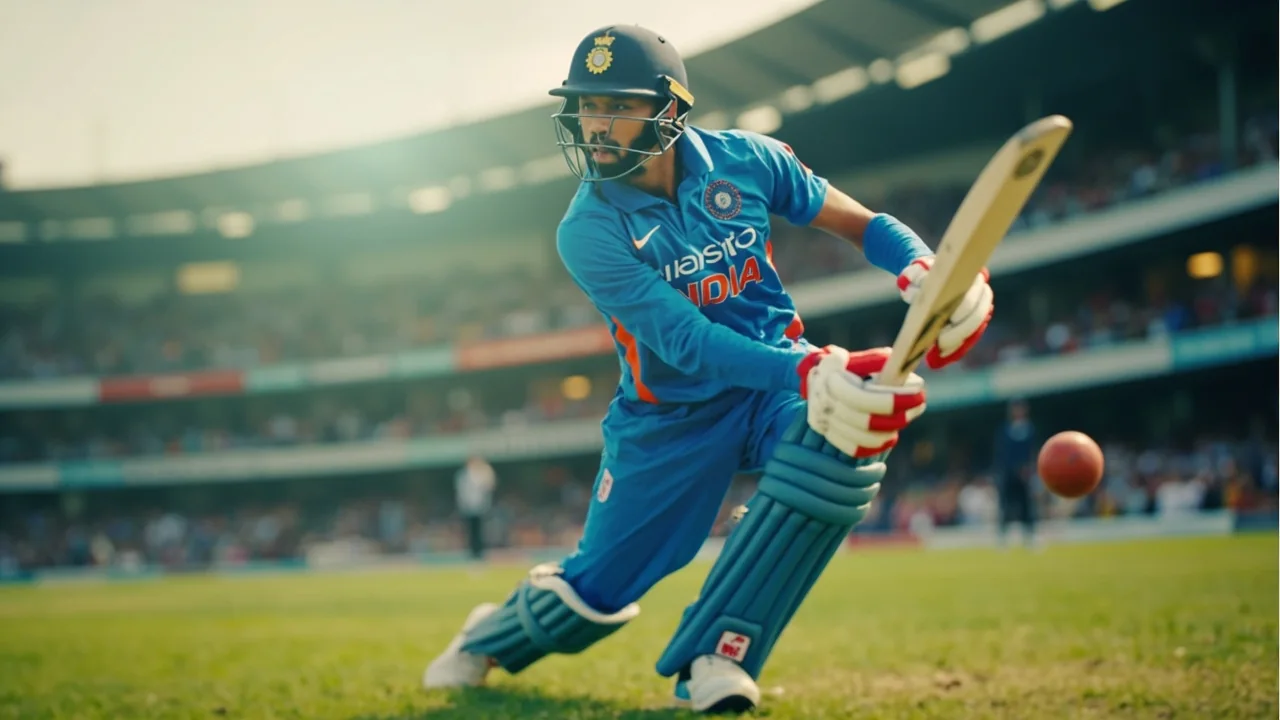
Vaibhav Sooryavanshi Named East Zone Vice-Captain For Duleep Trophy 2026 At 15
East Zone has handed the Duleep Trophy 2026 vice-captaincy to Vaibhav Sooryavanshi, eight first-class matches into a senior career that already includes a 776-run IPL 2026 season and an India U19 captaincy sweep in South Africa. Ishan Kishan keeps the captain's armband as wicketkeeper, but the leadership group around him now includes a 15-year-old being deliberately stretched.
· 8 min read · Halaplay Editorial Desk
Compliance Notice: Halaplay is a skill-based fantasy sports platform operating in India. This product is available only to users 18+ in permitted states. Fantasy sports involve skill and strategy; outcomes depend on real-world match performance. Please play responsibly. Check local regulations before participating.
East Zone selector Pravanjan Mullick has confirmed that 15-year-old Vaibhav Sooryavanshi will be Ishan Kishan's deputy at the Duleep Trophy 2026, the deepest red-ball assignment of the teenager's career and the youngest vice-captaincy in a senior domestic squad on recent record. The East Zone squad named for the tournament includes Mohammed Shami, Abhimanyu Easwaran and Mukesh Kumar, a bowling and batting core that has the air of a shortened India selection meeting rather than a state combination.
The framing from Mullick is unusually direct. Sooryavanshi has been handed the additional responsibility to accelerate his maturity, with Kishan keeping the captaincy as the side's wicketkeeper. It is a statement that puts the experiment on the record before a ball has been bowled: East Zone does not see this as a junior consolation prize. They see it as the next step in a development curve that has moved from Bihar's Ranji Trophy ranks to the IPL top of the order to India U19 captaincy inside fifteen months.
The Eight-Match First-Class Record Behind The Call
The numbers behind the elevation are narrower than the headlines suggest. Sooryavanshi has played eight first-class matches, scoring 207 runs in twelve innings at an average of 17.25, with one fifty and a highest score of 93. Those are the figures of a player still finding his feet in red-ball cricket, not a teenager who has already mastered the format. The Duleep Trophy is, in effect, his first sustained assignment at four-day level against the kind of attack the format demands.
East Zone's read is that the white-ball form is ahead of the red-ball record, and that the gap is a workload problem rather than a skill problem. The 2026 IPL season gave him sixteen innings at the top of the order for Rajasthan Royals, where he finished with 776 runs at an average of 48.50 and a strike rate of 237.30. Those are not numbers that translate cleanly into red-ball cricket, but they are evidence of an ability to read high-class bowling at pace that the selectors have decided to test rather than shelter.
India's white-ball pipeline has historically protected teenage talent from red-ball exposure until they were closer to physical maturity. Sooryavanshi's elevation marks a quiet departure from that pattern. East Zone is asking the selectors' question out loud: if the white-ball ceiling is already in view, is it better to expose him to four-day cricket now, with the leadership role as a vehicle for accelerated learning, or to wait another year and risk the gap between formats widening further.
The Bihar Vice-Captaincy That Started The Pattern
This is not the first time Sooryavanshi has been given a leadership role above his age group. Bihar named him vice-captain for the opening matches of their 2025-26 Ranji Trophy season at fourteen, working under Sakibul Gani. The brief was a familiar one in Indian domestic cricket: a senior captaincy for stability, a teenage deputy for succession planning, and the kind of dressing-room exposure that travel, video review and team meetings provide even before the player has a settled spot in the XI.
The Bihar stint did not produce a breakthrough red-ball season, and there is no public record of the Bihar dressing room's internal verdict on how Sooryavanshi handled the vice-captaincy. What it did produce was a data point for the national selectors: a fourteen-year-old could carry the responsibilities of a senior vice-captaincy in a first-class environment without the role becoming a story. The Duleep Trophy elevation, a year on, is the same experiment scaled up.
East Zone's squad for the 2026 Duleep Trophy includes senior professionals who have been through India camps, IPL franchise systems and the wider domestic grind. Shami's presence alone changes the dressing-room dynamic for any young player, and Easwaran brings the experience of an extended India Test squad cycle. Putting a fifteen-year-old in the vice-captaincy in that environment is a deliberate signal that the selectors want him integrated into the senior professional tier, not protected from it.
The South Africa U19 Series As Captain: What Changed
The most relevant prior for Sooryavanshi as captain is the India U19 tour of South Africa earlier in 2026. He was called up to lead the side after Ayush Mhatre was unavailable, and the three-match Youth ODI series finished with a clean sweep and the Player of the Series award. Across the three matches, he scored 206 runs, with a fifty in the first innings, 68 off 24 balls in the second, and 127 off 74 in the third. The last two innings each featured ten sixes.
The South Africa numbers matter because they are the first time Sooryavanshi was publicly accountable for team outcomes as well as personal runs. A fifty in the first match set the platform; the second-innings assault confirmed the template that he is comfortable batting with; the third-innings hundred closed out the series. The selectors who watched that tour came back with a more nuanced view of his leadership than the IPL numbers alone could provide.
There is, however, an important distinction between Youth ODI captaincy and senior domestic vice-captaincy. The U19 format gives him one-day cricket with white Kookaburra balls on flat South African tracks; the Duleep Trophy will give him red-ball cricket with the SG Test ball, four-day scheduling, and dressing-room dynamics that include players old enough to have played Ranji Trophy cricket before he was born. The South Africa run is evidence of intent. The Duleep Trophy will be the first proper test of whether the intent survives contact with the longer format.
The Tendulkar Warning That Frames The Conversation
Sachin Tendulkar has been one of the more prominent voices around Sooryavanshi's rise, and his public comments earlier in 2026 introduced a useful corrective. Tendulkar warned that too many instructions could interrupt Sooryavanshi's ball-recognition speed, the split-second cognitive processing that allows a batter to identify length and line before the ball is halfway to him. It is a specific skill, and it is one of the things the IPL 2026 numbers quietly confirmed.
East Zone's elevation is, in effect, a test of how that ball-recognition speed holds up under the additional mental load of vice-captaincy. The captain's role at domestic level is partly ceremonial, but it adds responsibilities around field settings, bowling changes, and the conversations with senior players that can absorb attention at exactly the moment a young batter needs it free. The selectors have chosen to run that experiment in public, with the Duleep Trophy as the venue.
The Tendulkar warning is also a reminder that not every development decision around a teenage talent has to be the right one in retrospect. Indian cricket has a long history of protecting young players from senior exposure for reasons that look obvious in hindsight, and an equally long history of pushing them into senior cricket for reasons that look obvious in hindsight. Sooryavanshi's case is unusual because both options are being argued in public at the same time.
The Captaincy Benchmarks: Graeme Smith And Shubman Gill
The most common comparison in the discussion around Sooryavanshi's captaincy potential is Graeme Smith, who became South Africa's Test captain at twenty-two. That is a useful reference point for what an unusually young captaincy appointment looks like at the international level, but it has limited application to a domestic vice-captaincy at fifteen. Smith had already captained in domestic cricket for two seasons before the Test call-up. Sooryavanshi is, by design, getting his first sustained senior vice-captaincy now.
The closer comparison is Shubman Gill, whose 2025 England Test tour has become a reference point for young Indian batters in transition. Gill finished that tour with 754 runs at 75.40 across five Tests, including four hundreds and innings of 269 and 161 at Edgbaston. The Gill parallel is useful not because the two players are stylistically similar but because both have been asked to carry leadership responsibilities at a stage of their career where most Indian batters were still waiting for a settled spot in the XI.
What Fantasy Managers On Halaplay Should Read Into This
For fantasy managers on Halaplay, the Duleep Trophy vice-captaincy is a signal worth tracking but not yet a captaincy indicator. East Zone's selection does not change Sooryavanshi's fantasy ceiling in the short term. His IPL 2026 ceiling is what it was; his first-class record has not changed overnight; his role in the Rajasthan Royals XI for IPL 2027 will be decided by the auction and the franchise, not by East Zone's selectors. The fantasy-relevant information is what the Duleep Trophy run actually produces, not the announcement itself.
The cleanest read for fantasy team-building is that Sooryavanshi's selection broadens his red-ball portfolio. He will be playing four-day cricket alongside senior India bowlers, against other zone teams with their own India-contracted players, on tracks that reward different skills than the IPL. The first-class numbers that emerge from this tournament will be the most reliable data point fantasy managers have for projecting his red-ball ceiling, which matters more for Test-match-linked fantasy formats than for the IPL formats that dominate the Halaplay contest calendar.
The vice-captaincy itself adds a fantasy-relevant wrinkle in Duleep Trophy-linked contests where leadership roles carry points. The same logic applies in domestic fantasy formats: vice-captaincy multiplies are common in red-ball fantasy contests, and East Zone has confirmed Sooryavanshi as the player who will collect that multiplier for his zone. Whether that translates into Halaplay-specific contests depends on how the platform frames the Duleep Trophy as a fantasy event, which has not yet been announced.
The Shami And Easwaran Context Inside The East Zone Squad
Mohammed Shami's presence in the East Zone squad is the single most important contextual detail. Shami is back from a long injury layoff and has been working his way through red-ball cricket in domestic conditions before the India Test squad's next engagement. A four-day tournament against the South, West, North and Central zones is the cleanest possible test of where Shami's body is at ahead of a potential Test recall. Sooryavanshi's vice-captaincy runs in parallel, not in competition.
Abhimanyu Easwaran is the more relevant senior leadership context inside the batting group. Easwaran has been on the edge of India Test selection for the better part of two years, with consistent domestic runs but limited international opportunities. Sooryavanshi's vice-captaincy does not affect Easwaran's position in the XI, but it does put a fifteen-year-old in the leadership conversation alongside a senior batter who is widely seen as the next cab off the rank in red-ball cricket.
Mukesh Kumar completes the senior bowling core alongside Shami, and provides the kind of disciplined seam-bowling template that a young vice-captain can learn from. The dressing-room dynamic for the East Zone Duleep Trophy side will be unusually rich: a returning international seamer, a settled red-ball batter on the edge of selection, a frontline new-ball bowler in Mukesh, and a fifteen-year-old vice-captain working through his first sustained four-day tournament. The selectors have stacked the brief.
What The Duleep Trophy Run Could Prove Or Disprove
The cleanest case for the elevation is straightforward. Sooryavanshi has already shown at U19 level that he can captain a side to a series win in overseas conditions. The IPL 2026 numbers confirm that he can bat against the highest-quality bowling on offer in India. The selectors' hypothesis is that the gap between the U19 leadership and senior domestic leadership is a manageable step, not a generational leap. The Duleep Trophy is the experiment that will confirm or refute that.
The cleanest case against is that red-ball cricket at the domestic level asks different questions than T20 cricket at the IPL or fifty-over cricket at the U19 level. The Duleep Trophy format rewards patience, the ability to bat long innings, and the kind of technical adjustment to red-ball movement that takes most batters several seasons to develop. A Player of the Series award in a Youth ODI series in South Africa is evidence of one skill set. Senior four-day cricket in India is evidence of another.
The honest middle is that nobody, including the selectors, knows yet which way this will land. Mullick has been clear that the vice-captaincy is intended to accelerate maturity, which is a developmental framing rather than a finished-product framing. The fantasy-relevant and cricket-relevant conclusions will come from the run itself, not from the selection. For now, the headline is the appointment, the verdict will be the runs.
Frequently Asked Questions
Who is captaining East Zone in the Duleep Trophy 2026?
Ishan Kishan is the East Zone captain for the 2026 Duleep Trophy, with Vaibhav Sooryavanshi named as vice-captain. East Zone selector Pravanjan Mullick confirmed the appointments, with Kishan retaining the captaincy as the side's wicketkeeper and Sooryavanshi given the additional responsibility to accelerate his maturity.
How old is Vaibhav Sooryavanshi and how many first-class matches has he played?
Vaibhav Sooryavanshi is fifteen years old at the time of the Duleep Trophy 2026 announcement. He has played eight first-class matches, scoring 207 runs in twelve innings at an average of 17.25, with one fifty and a highest score of 93. His red-ball record is a workload problem the selectors are addressing rather than a finished statistical profile.
What was his performance as India U19 captain in South Africa?
Sooryavanshi captained India U19 in a three-match Youth ODI series sweep in South Africa earlier in 2026 after Ayush Mhatre was unavailable. He finished Player of the Series with 206 runs across the three matches, including 68 off 24 balls in the second match and 127 off 74 in the third, with ten sixes in each of those innings.
What did Sachin Tendulkar say about Sooryavanshi's development?
Sachin Tendulkar publicly warned earlier in 2026 that too many instructions could interrupt Sooryavanshi's ball-recognition speed. The comment has framed the broader conversation around how senior leadership responsibilities should be layered onto a young batter whose core skill depends on rapid cognitive processing of length and line.
For ongoing cricket news and analysis from the Halaplay editorial desk, the cricket news archive covers tournament previews, player features and fantasy-relevant updates throughout the 2026 domestic and white-ball calendar.