#Dream11#Uttar Pradesh#Rs 4 Crore#PBKS vs CSK#Fantasy Cricket

What actually happened on 29 April 2025 in the PBKS vs CSK fixture
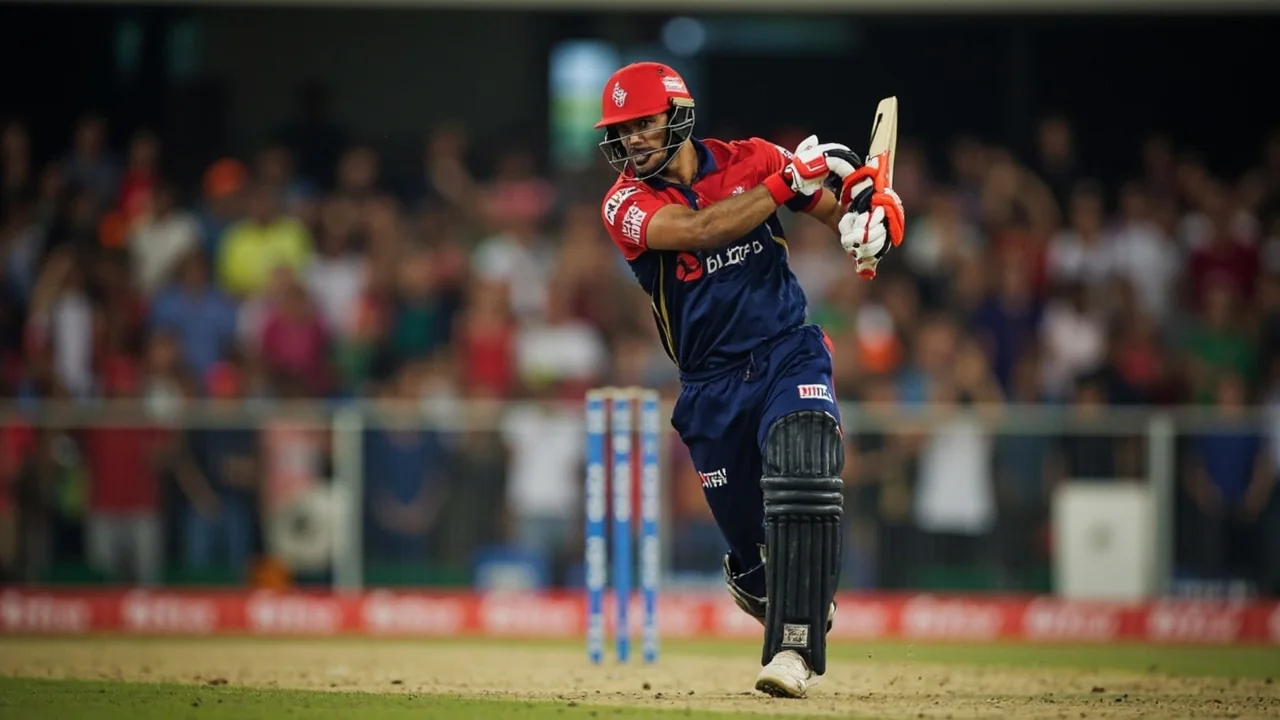
The fixture Punjab Kings vs Chennai Super Kings on 29 April 2025 was a mid-table IPL 2025 contest. For most fantasy managers running Halaplay teams that night, the headline debate was captaincy: a powerplay option against the Super Kings' new-ball pair, or a death-overs finisher against a Punjab Kings attack that had been conceding in the final two. Among the hundreds of thousands of entries across Dream11's contest ladder that day, one was filed by a plywood factory hand from Hapur named Prasad. The Indian Express report filed on 6 May 2025 confirmed that Prasad had been playing Dream11 for several months, mostly at the Rs 49 entry level, and switched to a Rs 39 contest for the PBKS vs CSK fixture. The decision produced a Rs 4 crore gross prize.
Prasad, now in his early thirties, left school before finishing class ten and has spent the last several years pulling shifts at a plywood unit in Hapur. He grew up in Ghasi Ram Purwa, a small village in Kaushambi district, where his father Sukhlal Saroj still farms a modest holding and where he has four brothers and two sisters to share the household load. Prasad himself is married with three young children, and the Hapur wage is what the family leans on between harvests. Once the payout hit his Dream11 wallet, the WhatsApp messages in Ghasi Ram Purwa moved faster than the wire transfer did: neighbours and extended family crowded into the family home to congratulate him, and the village chowk saw a steady stream of visitors through the week that followed. The financial weight of a payout this size sits at the bank-side end of the timeline, but the social weight arrived in the first 48 hours. For Halaplay readers, the family and village picture is the context that makes the Rs 39 entry read like more than a one-line anecdote — it is the kind of ticket a daily-wage worker in Hapur can afford to file every couple of weeks during a marquee IPL week, with the household waiting on the other end.
The Rs 39 entry, Rs 49 habit, and what stake size actually buys on Dream11
Prasad's switch from Rs 49 to Rs 39 on 29 April 2025 looks small on the surface. In Dream11's contest ladder, both stakes sit in the lower-mid band for weekly IPL fixtures — well below the Rs 99, Rs 199 and Rs 499 mega-contest tiers that dominate grand-league payouts. The verified win, however, came from the lower end of that band, which is the detail fantasy managers building Halaplay teams should keep in front of them.
The reason stake size matters is structural. On Dream11, contest prize pools scale with the size of the entry pool, and headline payouts — the Rs 1 crore-plus tier that ran on PBKS vs CSK — are usually reserved for the Rs 199 and Rs 499 contests. A Rs 39 contest distributing a Rs 4 crore first-place prize therefore implies either a guaranteed prize-pool structure (where Dream11 tops up the pool to a headline figure regardless of entry volume) or a contest-specific promotional prize pool, both of which Dream11 runs during major IPL weeks. For fantasy players mapping their Halaplay entry strategy, the read is direct: substantial grand prizes are not gated behind the Rs 199 tier. The platform does run guaranteed headline-prize structures at Rs 39 and Rs 49 during marquee IPL fixtures, and that has been the case across the 2024 and 2025 seasons.
The wider lesson sits at the bankroll level. Prasad had been entering Rs 49 contests for months. The pivot to Rs 39 was Rs 10 cheaper per attempt. Across dozens of attempts in a season, that difference is small enough that a plywood factory hand could absorb it from a daily-wage budget. The structural upside was identical to a Rs 49 contest that night — Dream11 does not score entries higher or lower based on stake size, and the prize eligibility rules are uniform across the lower-mid band. For fantasy players who run a strict 2 per cent bankroll cap per entry, the Rs 39 entry translates to a slightly smaller bankroll commitment for the same prize-tier exposure. That is a clean edge on paper.
Why the 30 per cent tax cut matters more than the headline number
The Indian Express report recorded the gross prize as Rs 4 crore and the net payout as Rs 2.8 crore — a 30 per cent deduction that aligns with the flat-rate TDS (tax deducted at source) Dream11 applies under Section 194BA of the Income Tax Act on net winnings above the threshold set by the annual Union Budget. The 30 per cent figure is the post-threshold applicable rate; below the threshold, no TDS is deducted and the full prize flows to the wallet. For Prasad, the prize sat well above the threshold, so the full 30 per cent was applied.
For fantasy players, the 30 per cent cut is not an abstraction. Every prize credit that appears in a Dream11 wallet during a marquee IPL week carries the same haircut, and the platform deducts TDS before crediting the balance. The verified Rs 2.8 crore net payout on the Rs 4 crore headline number is therefore the only number that determines bank-side financial planning. That distinction matters because Dream11's published contest pages list the gross prize, but the wallet credit, the bank transfer, and the final I-T reporting all use the post-TDS figure. Any fantasy manager running a season-long bankroll should expect headline prizes to land at roughly 70 per cent of the listed figure when the gross sits above the TDS threshold.
What the verified timeline says about how Dream11 pays out a Rs 4 crore grand prize
The Indian Express piece made one operational detail explicit: the prize money had been credited to his Dream11 wallet, but had not yet been reflected in his bank account at the time of publication on 6 May 2025. That delay window — typically 24 to 72 hours for first-time winners above the Rs 1 crore mark, owing to enhanced KYC, source-of-funds verification and bank-side processing for large NEFT or RTGS transfers — is the operational reality fantasy players should expect at the top of the prize ladder.
For Halaplay readers who have never withdrawn above Rs 50,000, the read-across is worth marking. Dream11's standard UPI and Paytm withdrawals above Rs 50,000 cumulative trigger KYC verification (Aadhaar or PAN upload), and first-time withdrawals above Rs 1 crore trigger an additional source-of-funds compliance step. Neither step changes the prize eligibility — the credit is in the wallet the moment the contest result is published — but they do lengthen the time between the credit and the bank reflection. Prasad's case sat inside that same window. The win date was 29 April 2025; the publish date was 6 May 2025; the bank reflection was still pending a week later.
The PBKS vs CSK captain-pick math behind a Rs 4 crore win
On Dream11, a Rs 4 crore first-place payout in a single IPL fixture is the kind of number that rewards a captain-pick combination of unusually high fantasy-point yield, not a single-game hot streak. The PBKS vs CSK fixture on 29 April 2025 produced a high-scoring contest by IPL 2025 standards — both sides posted totals that put their top-order batters in the upper band of fantasy-point accumulation for the week. For Prasad, the published fact is the entry, the fixture and the prize. The team composition is not detailed in The Indian Express piece, and any attempt to reconstruct his exact XI from secondary coverage would be speculation. What the verified record does establish is the band: a Rs 39 contest entry filed during a marquee IPL fixture, on a day when the captain-pick combination across the winning entry cleared the kind of point threshold that pays out at the Rs 4 crore headline tier.
For Halaplay fantasy managers building contest entries for current IPL cycles, the read-across has three layers. First, the captain pick for the day needs to come from the side with the higher projected top-order yield, and the vice-captain pick from the differential lane — a player whose expected ownership across the contest pool sits below 20 per cent. Second, the contest tier is independent of stake size at this end of Dream11's prize ladder; the Rs 39 entry saw the same headline reward tier as the Rs 49 contests Prasad had been entering. Third, the bankroll discipline — Rs 39 entry, single attempt, verified KYC in place — is what made the result sustainable.
The video trail, the viral math, and why the story reached The Indian Express desk
Prasad's win surfaced in regional press first via an India Today report, then caught national attention when a clip by @sachinguptaup crossed a million views after a 5 May 2025 retweet by @IndianTechGuide. The Indian Express ran it under Trending on 6 May 2025. For fantasy players, the viral trail matters less than the underlying payout event, but it is the reason this kind of prize tier shows up in mainstream coverage with enough frequency to map.
The mechanism is straightforward. A Rs 4 crore gross prize on a Rs 39 entry sits in the same prize band as a mid-size IPL season mega-contest payout, but the entry-size contrast — Rs 39 against Rs 4 crore — generates the narrative angle. Indian-language regional reporters who cover smaller-town fantasy success stories regularly pick up on the same contrast. For Halaplay readers who run contest entries weekly, the read-across is that the narrative spotlight cycles between entry-size, fixture context, and recipient profile, and the verified underlying facts (entry, fixture, gross, net) remain the same across every retelling.
What Prasad said he would do with the money, and what that signals about fantasy win planning
The Indian Express piece carried Prasad's stated intent plainly. He had been hoping for a win after frequent losses and intended to use the winnings to start a business. That detail sits outside the strict fantasy-cricket frame of the article, but it is the part of the verified record that determines whether a prize of this scale gets preserved through the bank-side processing window. Bankroll discipline on the way in — Rs 39 entries inside a 2 per cent cap, KYC documentation prepared in advance — is what makes a prize usable on the way out, because first-time withdrawals above Rs 1 crore trigger source-of-funds verification that requires a credible answer to that question.
For Halaplay readers who have never won above the Rs 50,000 threshold, the operational point is to keep contest history, withdrawal history, and PAN documentation ready before any marquee-week entry. Dream11's KYC and source-of-funds checks at the upper tier are not punitive — they are standard compliance — but they slow the wallet-to-bank timeline for first-time winners. Prasad's week-long gap between contest result (29 April 2025) and bank reflection (still pending on 6 May 2025) is the published version of that timeline.
What this retrospective tells fantasy players building Halaplay teams today
The Prasad win is the cleanest published illustration of three Dream11 realities fantasy players should treat as settled going into the next IPL cycle. First, headline-tier prizes are reachable from single-digit entry sizes during marquee IPL weeks — Dream11 runs guaranteed prize-pool structures at Rs 39 and Rs 49 that pay out at the Rs 4 crore tier. Second, the 30 per cent TDS deduction under Section 194BA applies uniformly once the prize sits above the threshold, and the net payout — Rs 2.8 crore in Prasad's case — is the number that flows to the wallet and the bank. Third, the bank-reflection timeline above Rs 1 crore is measured in days, not minutes, and is gated by KYC and source-of-funds verification that apply on first-time withdrawals at that scale.
For anyone building Halaplay grand-league teams through the back half of the current IPL calendar, the read-across from this retrospective is direct. Run a bankroll cap that lets you absorb a Rs 39 or Rs 49 entry per marquee fixture without strain, take the captain pick from the higher-yield side, take the vice-captain pick from the differential lane, and prepare the KYC file before the first marquee-week entry is filed. The verified record of 29 April 2025 confirms that the prize ladder at the top of Dream11's contest structure is open from the lower-mid entry band — which is the side of the prize ladder most Halaplay users already sit on.
For readers who came to this article from the Halaplay Winners hub, the takeaway is the same as it has been across this season's retrospectives. Dream11's lower-mid contest band — Rs 39, Rs 49, Rs 99 — produces real headline-tier winners during marquee IPL fixtures, and the entry size that produced this particular Rs 4 crore win is the same entry size that most Halaplay users run as their default. The trail Prasad left behind — entry, fixture, gross, net, payout timeline, declared intent — is the cleanest verified map of what a single Rs 39 ticket can do when the captain-pick combination clears the right point band on the right night.