Stirling Returns At Bready, Three Months After The T20 World Cup Knock
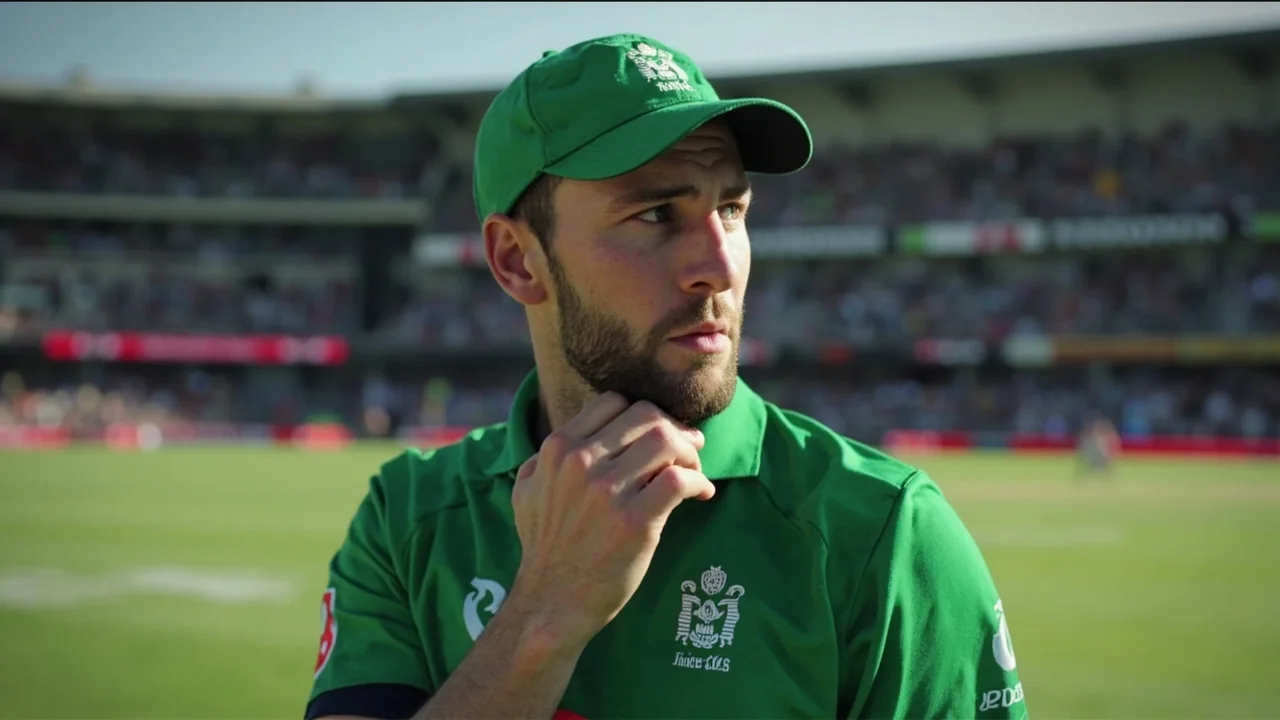
Three months after the shoulder injury that cut short his campaign at the ICC Men's T20 World Cup 2026, Paul Stirling will walk out at Bready Cricket Club on Wednesday 5 August with the Ireland ODI captaincy back on his chest. Cricket Ireland named the 38-year-old top-order batter at the head of a 14-player squad for the first three matches of a five-ODI series against Afghanistan, with the two Stormont fixtures in Belfast scheduled for the second half of the month still to have their squads confirmed closer to the date.
The Bready opener is the first 50-over game Ireland have played in fifteen months. That gap, between the home series against South Africa in May 2025 and the Afghanistan opener at the end of summer 2026, is the structural reason Stirling's return carries more weight than a routine recall. Ireland's white-ball depth has been rebuilt through T20I cricket in the intervening period — most prominently through the historic series win over India that announced the squad Moondra and Calitz now graduate into the ODI side from.
For readers tracking Ireland's World Cup cycle through the broader T20 World Cup 2026 hub, the Afghanistan series is the first concrete piece of 50-over evidence since the T20 side returned from England. The shape of Stirling's comeback — captaincy retained, batting slot intact, three debutants around him — is also a meaningful signal that the Irish selectors view the 2027 ODI World Cup cycle, not just the immediate Afghanistan assignment, as the planning window they are operating in.
The 14-Player Squad Named On 28 July
The squad confirmed on 28 July reads: Paul Stirling (captain), Mark Adair, Andrew Balbirnie, Ben Calitz, Curtis Campher, Cade Carmichael, George Dockrell, Gavin Hoey, Andrew McBrine, Liam McCarthy, Byron McDonough, Jai Moondra, Harry Tector and Lorcan Tucker. The make-up is a clear blend of senior T20I regulars and three players who have never previously worn Ireland's 50-over shirt at international level.
The notable absences read like a medical bulletin as much as a squad list. Josh Little, Matt Hollard, Craig Young, Barry McCarthy, Jordan Neill and David Delany are all unavailable for selection because of injury. Little's absence is the headline — the left-arm quick has been Ireland's first-choice powerplay and death bowler through the last T20 World Cup cycle and was in the original ICC Men's T20 World Cup 2026 squad before his own fitness setback. His absence opens the new-ball pairing for Mark Adair and a debut seamer, and shortens the death-over options considerably.
What Gary Wilson Said In His First Squad Announcement As Head Coach
This is the first series Gary Wilson will take charge of as Ireland's full-time head coach, after he was confirmed in the role earlier this year. Speaking alongside the squad release, Wilson framed the Afghanistan assignment as both a measuring stick and a development opportunity.
"I am very much looking forward to the series against Afghanistan," Wilson said. "These are our first ODIs in 15 months, and in the intervening period, many players have put their hand up for selection, which is a great place to be."
The comment matters because it underlines the selection method rather than the selection itself. Wilson's pitch is that the T20I results — and specifically the India series win that ran parallel to the Men's T20 World Cup 2026 — have created a wider pool of credible international players than Ireland have had in recent cycles, and that the Afghanistan squad is the first ODI expression of that expanded base. The debutants are not charity picks; they are the players who earned the call-up through T20I performances Wilson has now had direct exposure to.
Jai Moondra, Ben Calitz And Byron McDonough: The Three Debutants
The three maiden ODI call-ups are the most concrete evidence of the selectoral shift Wilson is describing. Jai Moondra and Ben Calitz were both part of Ireland's T20I series win over India earlier in the summer — a result that, against the reigning Men's T20I world champions, is the headline result of Ireland's 2026 calendar. Moondra's role in that series was as a middle-overs operator, while Calitz batted in the top six and contributed useful overs with the ball.
Byron McDonough's call-up is the surprise of the three. McDonough is a wicketkeeper-batter who has impressed at domestic level in Ireland over the last two seasons and earned selection through consistent runs in the inter-provincial competition. His path into the squad is different from Moondra and Calitz — he has not yet played T20I cricket, and his ODI debut will also be his international debut in any format. The selection is a signal that Wilson and the selectors are not running a closed door between domestic cricket and the international side.
For fantasy managers on Halaplay who pick across formats, the three names are worth marking early. None will arrive in the top credit band — Ireland's depth chart doesn't have multiple 11-credit options in this format — but each is a high-floor selection in a Halaplay ODI contest because of the role clarity they have been given. Moondra is the middle-overs bowling pick, Calitz is the batting all-rounder, and McDonough is the lower-order batting depth option behind Tucker.
Reading The Squad Through The T20 World Cup Cycle
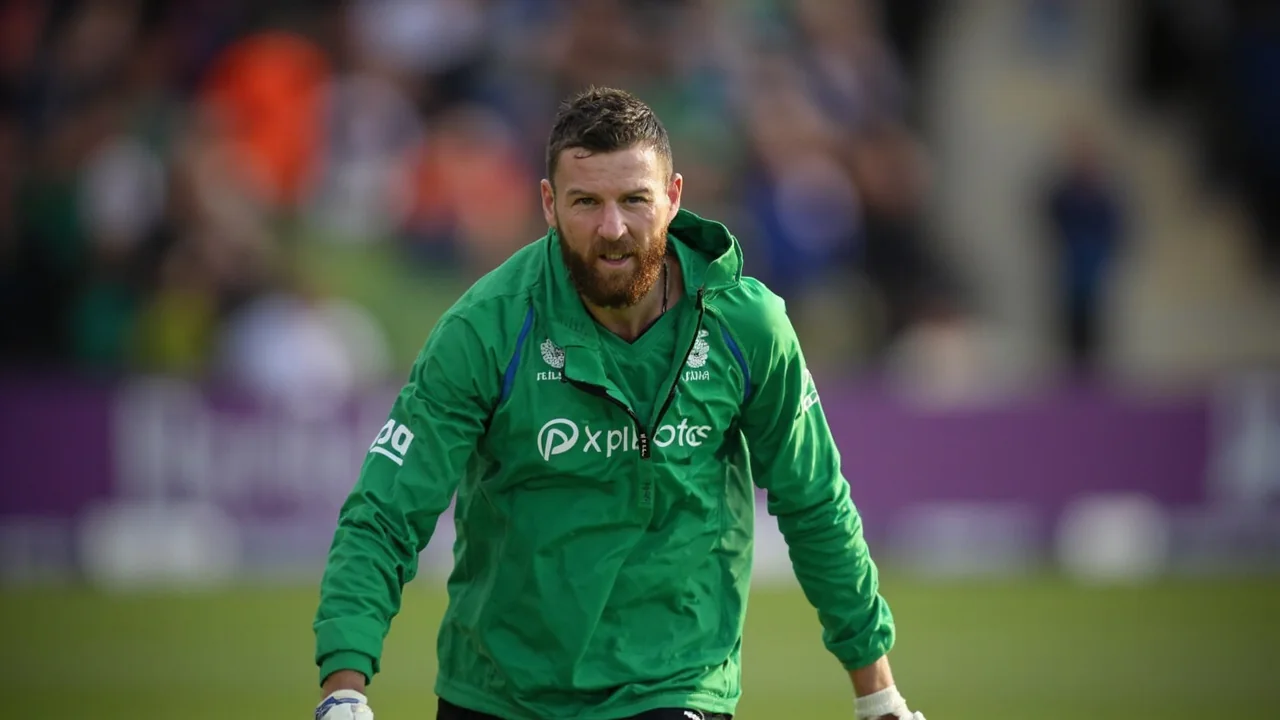
For readers who followed Stirling through the ICC Men's T20 World Cup 2026, the squad announcement is the missing piece of the puzzle. Stirling picked up the injury during the group stage of the tournament and missed the back half of Ireland's campaign; his absence created a top-order reshuffle that helped bring Calitz into the XI in the first place. The pattern of that reshuffle is now the pattern of the ODI squad: Stirling back at the top, Calitz in the middle order, and the captaincy retained.
The T20 World Cup context also explains the Adair selection. Mark Adair was Ireland's leading wicket-taker through the group phase of the tournament and is the senior pace bowler in the ODI squad by a distance. With Little, Young, McCarthy and Delany all out, Adair will lead a shortened seam attack that likely pairs him with one of the younger quicks — most probable Liam McCarthy or Gavin Hoey — for the new ball.
The spin department is similarly compressed. George Dockrell and Andrew McBrine are the only frontline spinners in the squad, which means both are likely to play all five matches if Ireland keep a consistent XI. Campher provides the seam-bowling all-rounder cover, and his batting at number six or seven gives Ireland an option to push the tempo if the top order consolidates early.
Stirling's Role: Anchor, Captain, And The Pivot Around The Top Order
Stirling's batting role in the ODI side has shifted over his career. Earlier in his international career he opened; in the middle of the last cycle he moved to number four as a middle-order anchor; more recently he has batted at three or four depending on the match-up. The Afghanistan squad, with Balbirnie at two or three and Tector at four or five, suggests Stirling slots in at his preferred anchor position with at least one batter ahead of him. That ordering matters for his run-rate calculus — Ireland's recent ODI template has been to consolidate the first ten overs and accelerate through the middle, which is exactly the brief Stirling has historically relished.
The captaincy has been his since Heinrich Malan's tenure ended, and Wilson's decision to retain him signals continuity in how Ireland want to set fields, manage bowler workloads, and pace the chase. For an Afghanistan side that has historically been aggressive against spin in the middle overs, Stirling's preference for keeping Dockrell and McBrine operating in tandem rather than rotating them is a tactical continuity worth noting.
The Schedule: Two At Bready, Three At Stormont
The full five-match schedule released alongside the squad splits cleanly between two venues. The first two ODIs — on 5 August and 7 August — are at Bready Cricket Club in County Tyrone, the smaller of the two Irish grounds but a familiar surface for the squad given the regular inter-provincial fixtures played there. The remaining three ODIs — on 10 August, 12 August and 15 August — move to Stormont in Belfast, the venue Ireland have used for most of their recent home international cricket.
The venue split has practical implications for selection. Bready's surface has historically offered more to the seamers early in a match and tends to slow as the innings progresses, which is a brief that suits Adair and McBrine. Stormont, with its larger square boundaries and slightly flatter outfield, is a more batting-friendly surface and the venue where Ireland have typically posted their biggest ODI totals in recent years. Expect a XI change between the two legs — most likely a batter in for a bowler at Stormont — as Wilson balances his resources across the five matches.
What This Means For Ireland's ODI World Cup 2027 Build
The 2027 ODI World Cup is the planning horizon Wilson is working to, and the Afghanistan series is the first formal step of that cycle. The inclusion of three debutants, the retention of Stirling, and the absence of so many senior bowlers through injury are all signals that Ireland are using the series as a development block rather than treating it as a results-only fixture. Two wins out of five would represent a successful summer; three or more would put Ireland firmly on the path they want to be on heading into the 2027 qualification window.
The depth chart also tells a story. With Campher and Tector both in their mid-twenties, Stirling still performing at the top, and McDonough now added as a wicketkeeping option, Ireland have an ODI core that can carry through to the next cycle without major surgery. The squad has the look of a side that is being assembled around Stirling's remaining career years, with the next generation — Moondra, Calitz, McDonough — slotted in around him rather than waiting in the wings.
Fantasy Reading For Halaplay Managers Across Formats
For Halaplay managers who run cross-format contests, the practical read-through from the squad announcement is in three layers. First, on the ODI side, Stirling is a confirmed top-order pick, Adair is the leading wicket-taking option, and the spin pair of Dockrell and McBrine are likely to share the full twenty overs between them across a typical match — which makes both legitimate captain picks in contests where wickets count heavily. Second, the three debutants carry selection risk but also carry the kind of role-defined profile that fantasy contests reward: each has a defined job in the XI rather than a floating position.
Third, and most relevant to the Halaplay contest lineup, the Afghanistan series opens the ODI contest calendar on the platform for 2026. That means the first ODI fantasy contests of the year on Halaplay will go live in the build-up to the 5 August Bready opener, with separate contests for each of the five matches. For fantasy managers who have spent the last six weeks on T20 World Cup and bilateral T20I contests, the ODI return is a meaningful rotation point — the longer format changes the captain differential calculus, makes bowler wickets more valuable, and rewards the kind of balanced XI thinking that the shorter formats do not.
Looking Past The Five ODIs
Beyond the Afghanistan series itself, the squad announcement is the first formal indication of how Ireland want to set up the rest of the 2026 ODI calendar. There is at least one further home ODI series expected in the autumn window, with the opposition not yet confirmed at the time of writing, and the squad architecture will likely rotate around the same core for that assignment. For readers of the cricket news cycle, the through-line is that Ireland's ODI side is in a defined rebuild around Stirling, the three debutants, and the head coach Wilson is putting his stamp on — and the Afghanistan series is the first scorecard that will tell us how far that rebuild has progressed.
The next concrete checkpoint is the squad announcement for the Stormont leg, expected in the days after the second ODI at Bready on 7 August. Any injuries picked up in the opening matches will shape that squad, and the performance of the debutants will determine whether Ireland carry them through to the 12 August and 15 August fixtures. The ICC Men's T20 World Cup 2026 injury to Stirling that opened the door for Calitz at this level is, in that sense, the thread that runs from the last global tournament into the next phase of Ireland's 50-over cricket.
Frequently Asked Questions
When does Paul Stirling return for Ireland's ODIs against Afghanistan?
Stirling is named in Ireland's 14-player squad for the first three ODIs against Afghanistan, with the series opening at Bready Cricket Club on Wednesday 5 August 2026. The remaining two fixtures of the five-match series are scheduled for Stormont on 10, 12 and 15 August.
Which three players received their first Ireland ODI call-ups?
Jai Moondra, Ben Calitz and Byron McDonough received maiden ODI call-ups in the 28 July 2026 squad announcement. Moondra and Calitz were part of Ireland's T20I series win over reigning Men's T20I champions India earlier in the summer; McDonough has not previously played international cricket in any format.
Why are Josh Little and other bowlers missing from the squad?
Josh Little, Matt Hollard, Craig Young, Barry McCarthy, Jordan Neill and David Delany are all unavailable for selection because of injury. Little was in the original Ireland squad for the ICC Men's T20 World Cup 2026 before his own fitness setback; his absence opens the new-ball pairing for Mark Adair and a younger seamer.
Is this Gary Wilson's first series as Ireland head coach?
Yes. The Afghanistan ODI series is the first series Gary Wilson will take charge of as Ireland's full-time head coach. Wilson framed the squad selection by noting that Ireland are playing their first ODIs in 15 months and that "many players have put their hand up for selection" through the intervening T20I cricket.
What injury kept Paul Stirling out of the T20 World Cup?
Stirling sustained an injury during Ireland's campaign at the ICC Men's T20 World Cup 2026 earlier in the summer. The injury cut short his tournament and led to a top-order reshuffle that included Ben Calitz's elevation to the T20I XI. His return to the ODI captaincy is the first confirmation that the injury has cleared fully.
Where are the five ODIs being played?
The first two ODIs on 5 and 7 August are at Bready Cricket Club in County Tyrone. The remaining three ODIs on 10, 12 and 15 August are at Stormont in Belfast. Squads for the Stormont leg will be confirmed in the days after the second Bready ODI.